
Fuxing Train: How to Ride & Book It in China
What a Fuxing train is, how it differs from Hexie, which routes may have it, and how to book a seat as a foreign traveler in China.
On this page
Last updated November 2026: a Fuxing train is one of China Railway's standardized high-speed trains, and you ride it by booking an ordinary G-series ticket. Fuxing (复兴号, Fuxing Hao) is the newer family that followed the older Hexie (CRH) trains, so it matters less for your booking than for your comfort. This guide covers how to spot one, what changes on board, and how to buy a seat within our wider guide to trains in China.
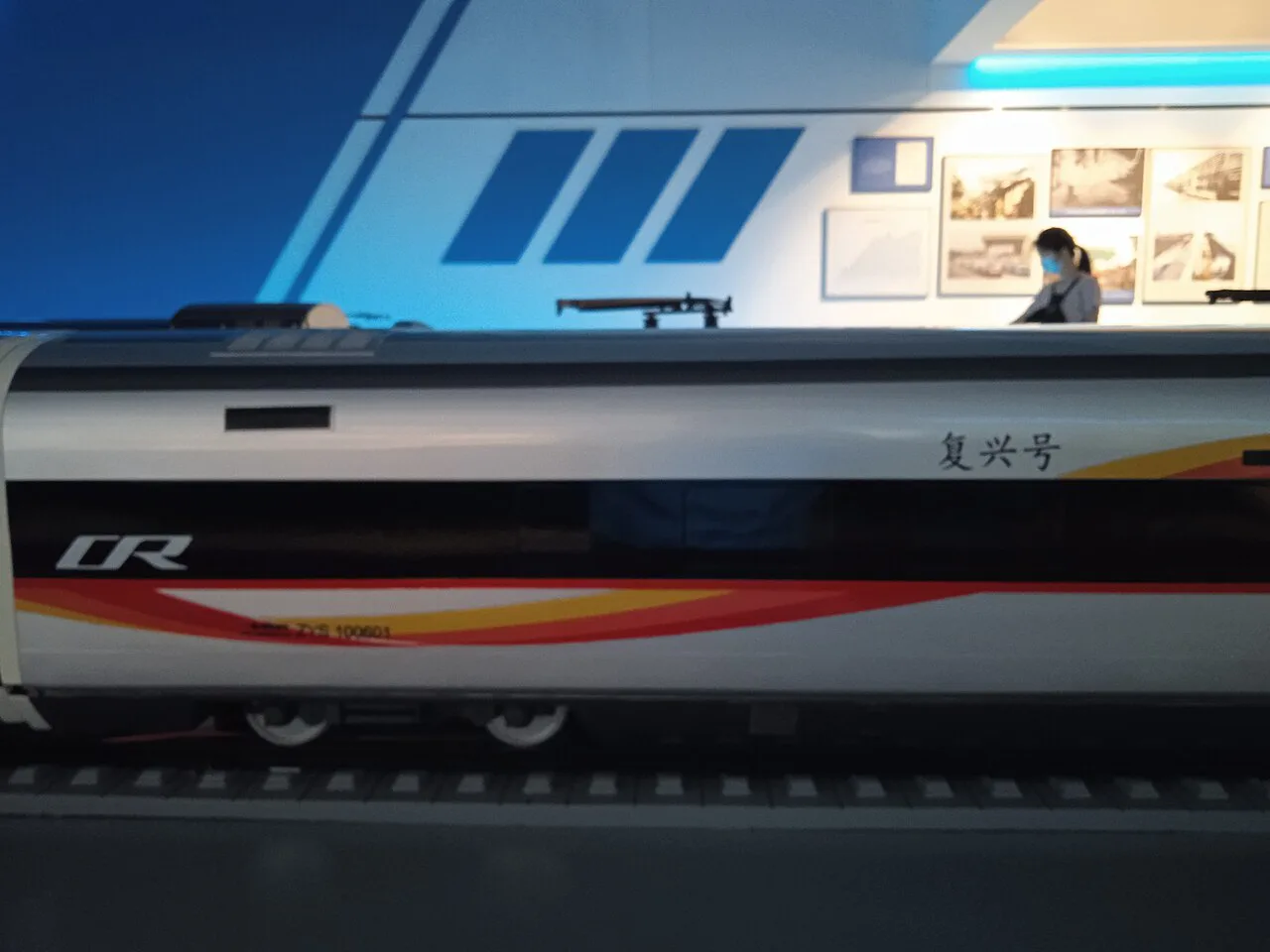
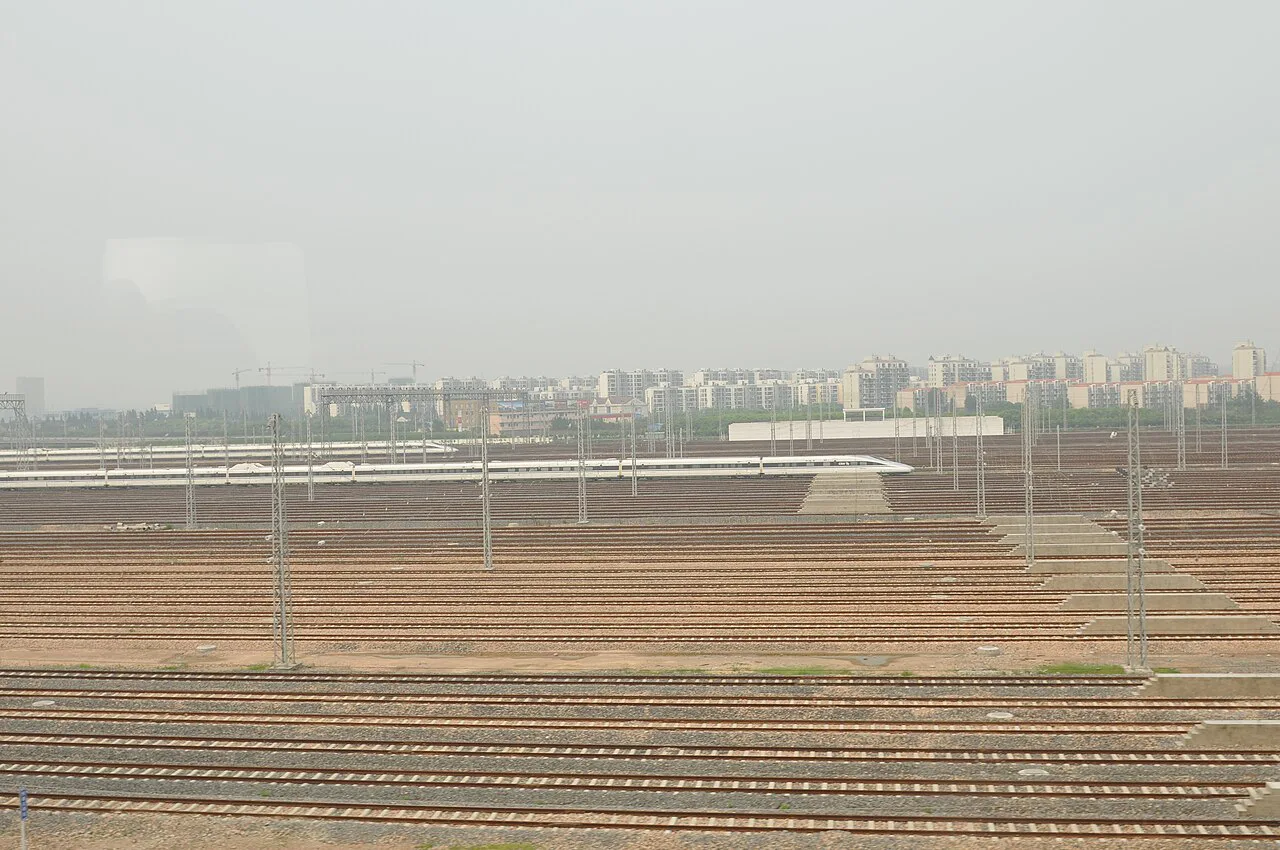
Featured image: 中少, CC BY-SA 4.0, via Wikimedia Commons.
What Is the Fuxing Train?
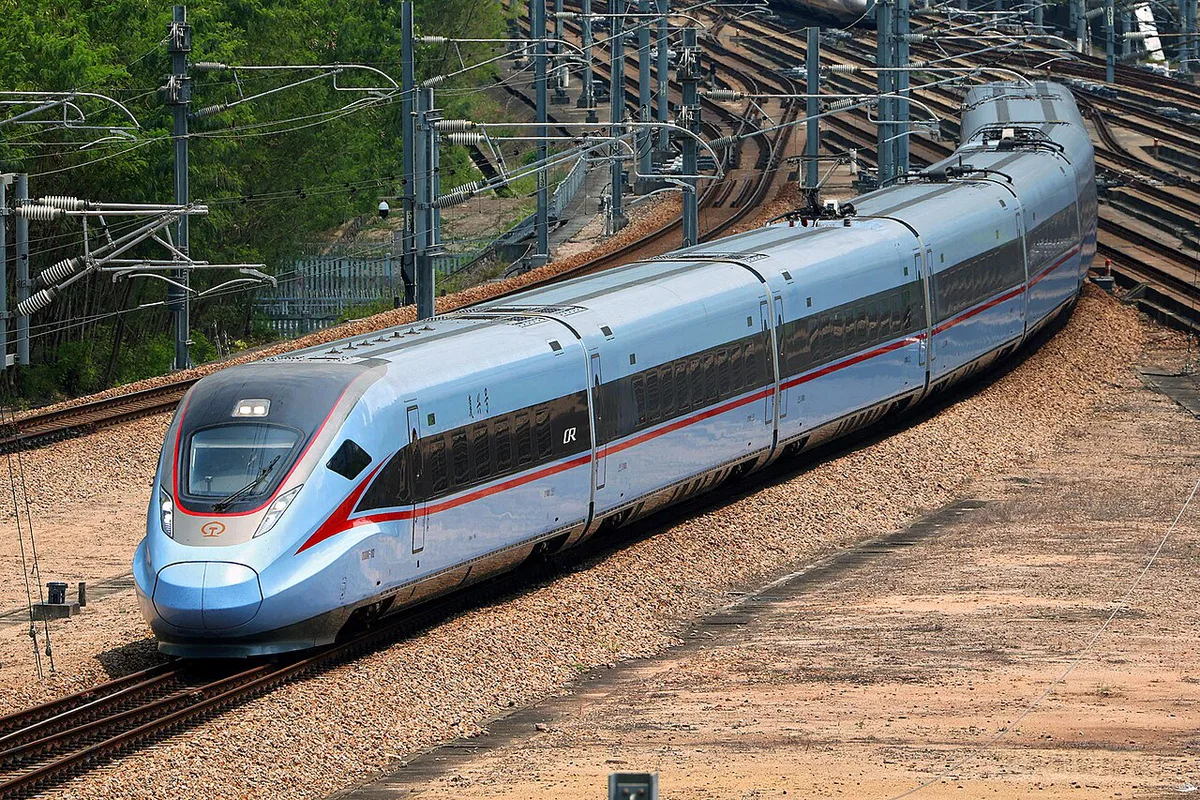
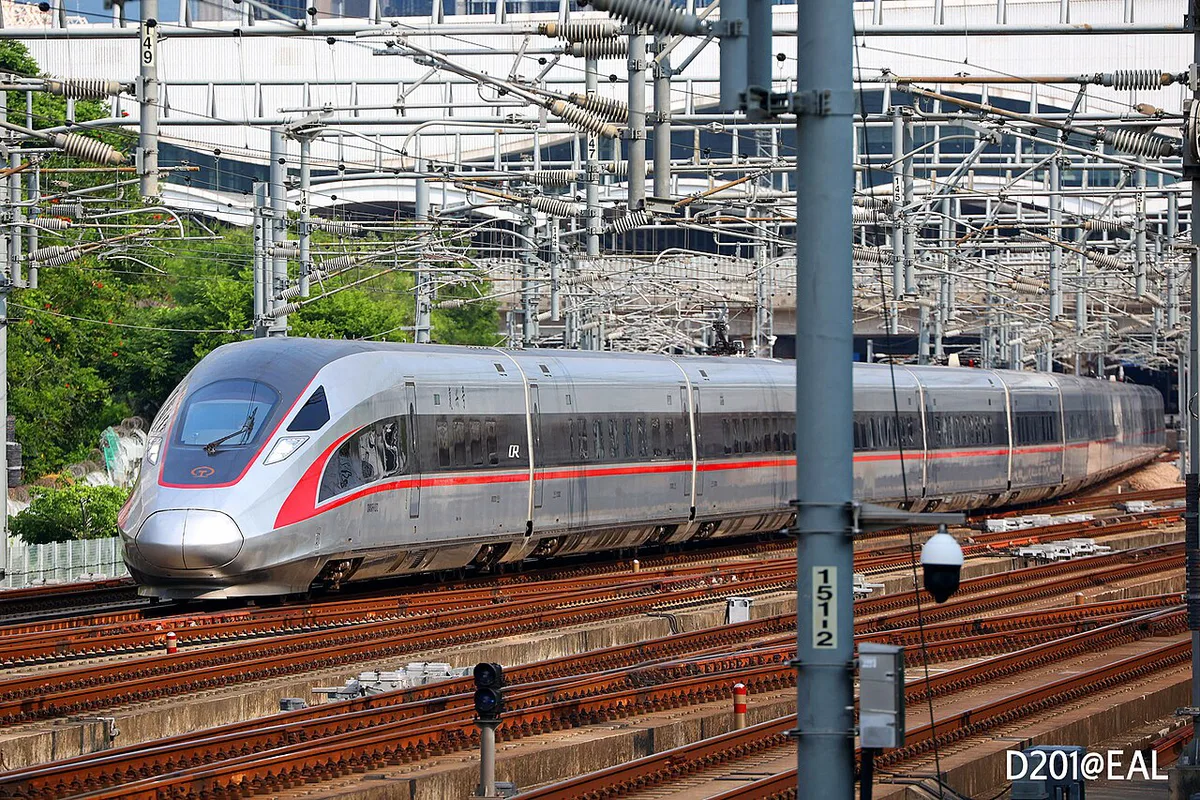
Fuxing Hao is the name for China's standardized electric multiple units (EMUs), operated by China Railway. Reports from its 2017 launch say the name means "rejuvenation". Two models entered service first: the CR400AF and the CR400BF. That launch came about ten years after the Hexie (CRH) trains were introduced in April 2007. Wikipedia gives the CR400AF a design speed of 400 km/h (about 249 mph) and a service speed of 350 km/h (about 217 mph). Many lines run slower. Timetables and booking rules sit on the China Railway official site.
- Operator: China Railway
- Models named at launch: CR400AF and CR400BF
- Design top speed: 400 km/h (about 249 mph); service speed 350 km/h
- Predecessor: Hexie (CRH) trains, introduced in 2007
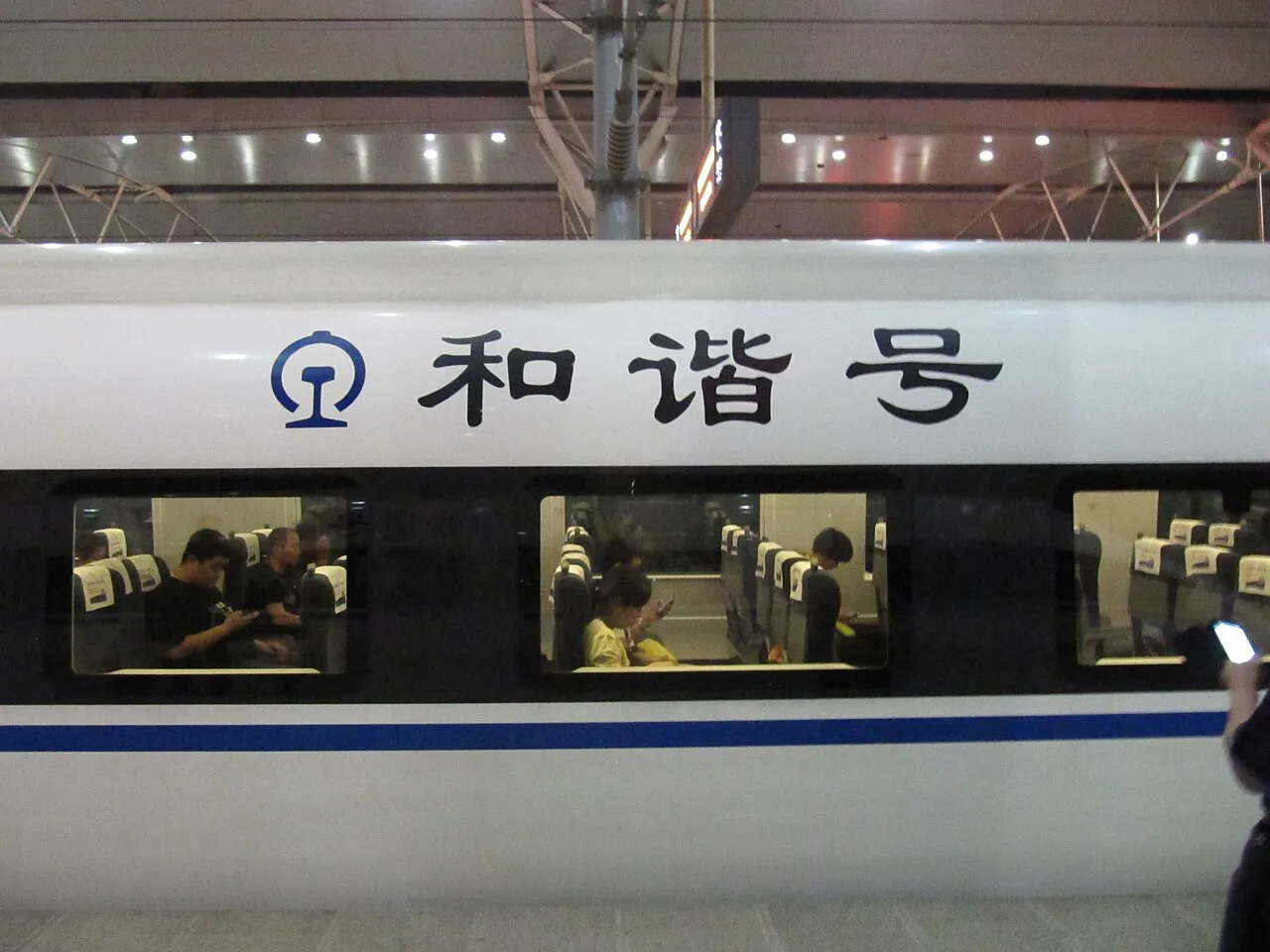
Fuxing vs Hexie: What Actually Changes for Passengers

For most travelers the two families feel similar from the platform. You buy the same kind of ticket, board through the same gates, and sit in the same class tiers. Differences in seat pitch, Wi-Fi and power sockets vary by train, so a blanket claim about either family is unreliable.
| Point | Fuxing | Hexie (CRH) |
|---|---|---|
| Introduced | 2017 | 2007 |
| Design | Standardized CR400 series | Earlier generation |
| How you book it | Normal G-train ticket | Normal G or D ticket |
| Choose it at checkout? | No booking filter for the train family | No booking filter for the train family |
- Verdict: it rarely affects whether you should book a train. Pick by departure time, station and fare.
How to Tell If Your Train Is a Fuxing
Start with the train number on your 12306 or Trip.com result. The number alone does not prove the family, because fleets are mixed on most corridors. Open the timetable or train detail and look for a stated model or type. If none is shown, you cannot reliably pick Fuxing at booking. Do not assume every G train is a Fuxing. You can browse trains on the 12306 English portal, then compare options in the 12306 English: Book China Trains With a Passport. Rather than chasing the label, choose a train that fits your schedule.
Seat Classes and Sleeper Options on Fuxing Trains
High-speed trains sell second class, first class and business class. Second class is the cheapest tier, and business class is priced as a premium. Our train class comparison explains the differences. If you want more space, read about business class on high-speed trains. A Fuxing sleeper version, the CR400AF-AE, runs between Beijing West or Shanghai Hongqiao and Hong Kong West Kowloon, and it is the first sleeper train capable of 350 km/h (Wikipedia). Our page on China's sleeper trains covers the overnight options.
Popular Fuxing Routes and Journey Times
Beijing–Shanghai is the best-known Fuxing corridor. The line runs 1,318 km (about 819 miles). The fastest G trains take about 4h18, and slower ones take up to about 6 hours (China Travel guides). Other corridors below often see Fuxing trains, but fleets are mixed, so no route is all Fuxing. Use our China Railway Map: How to Read the Network and Plan a Route to see how they connect.
| Route | Stations to check | Journey time | Fleet note |
|---|---|---|---|
| Beijing–Shanghai | Beijing South or West; Shanghai Hongqiao or Shanghai | About 4h18 for the fastest trains | Mixed fleet |
| Beijing–Guangzhou | Beijing West; Guangzhou South | Listed per train on 12306 | Mixed fleet |
| Beijing–Chengdu | Chengdu East | Listed per train on 12306 | Mixed fleet |
| Beijing–Xi'an | Xi'an North | Listed per train on 12306 | Mixed fleet |
| Beijing–Harbin | Shown on the ticket | Listed per train on 12306 | Cold-resistant Fuxing runs here |
How to Book a Fuxing Train as a Foreigner
Foreign visitors can book high-speed trains with a passport. The name on the ticket must match the passport you carry. Our walkthrough on booking train tickets in China covers the full process. Many visitors prefer the English interface of Trip.com for train tickets. Tickets go on sale 15 days ahead (Seat61).
Stations, Luggage, and Boarding Tips
Big stations take time to cross, so arrive early for security and the ticket gates. Our guide to China's train stations explains the routine. Cities often have several stations, and the wrong one is the most common mistake. In Beijing, compare Beijing South with Beijing West. In Shanghai, compare Shanghai Hongqiao with Shanghai Railway Station: Which Station, Metro & Tips. Read the station name on your ticket. Other endpoints include Guangzhou South, Chengdu East and Xi'an North. Read the rules in our luggage guide before you pack. Metro operators such as Beijing Subway help you reach the stations.
Beijing–Shanghai covers 1,318 km, so choose between Beijing South and Beijing West by where you stay.
- Wrong station for the city
- Passport name not matching the ticket
- Booking a non-direct train by accident
- Assuming every G train is a Fuxing
Winter and Northern Routes (Beijing–Harbin)
The cold-resistant CR400AF-G Fuxing is rated to operate down to -40 ℃ (also -40 °F), and a Fuxing runs on the Beijing–Harbin high-speed line (China Daily, January 2021). Fleets are mixed, so do not choose a train for this variant. Pack for the platform, not the carriage. Cold stations and long waits are the real winter problem.
Is the Fuxing Worth Choosing? Quick Decision Guide
Choose by schedule and fare, not by family. High-speed rail usually beats flying on city-center to city-center convenience. It also beats slower non-high-speed trains on time, though those can cost less. Skip the hunt for a Fuxing label if it forces an awkward departure. Choose business class only when you want extra space. For the wider picture, return to our China train overview.
The fastest Beijing–Shanghai trains take about 4h18, and your own train's timetable sets the real time.
Frequently Asked Questions
Can foreigners take trains in China?
Yes. Foreign travelers can book high-speed trains with a passport. The 12306 English portal and Trip.com both sell tickets.
What is the fastest train in China?
The Fuxing design top speed is 400 km/h and its service speed is 350 km/h, according to Wikipedia. Many lines run slower.
Notes on Asia's railways
Optional updates when we revise our train and route guides.
You might also like


Continue reading
More guides you'll find useful