China High-Speed Train Business Class: Is It Worth It?
What China's high-speed train business class gets you, how it compares with first class, and how to book it. Decide if it's worth the upgrade.
On this page
Last updated November 2026: China high speed train business class (商务座) is the top seat on selected G trains, above first and second class. It pays off on long intercity runs and is wasted on short hops like an airport link. Use this guide to match the class to your trip, then continue with our China train hub for the wider picture.
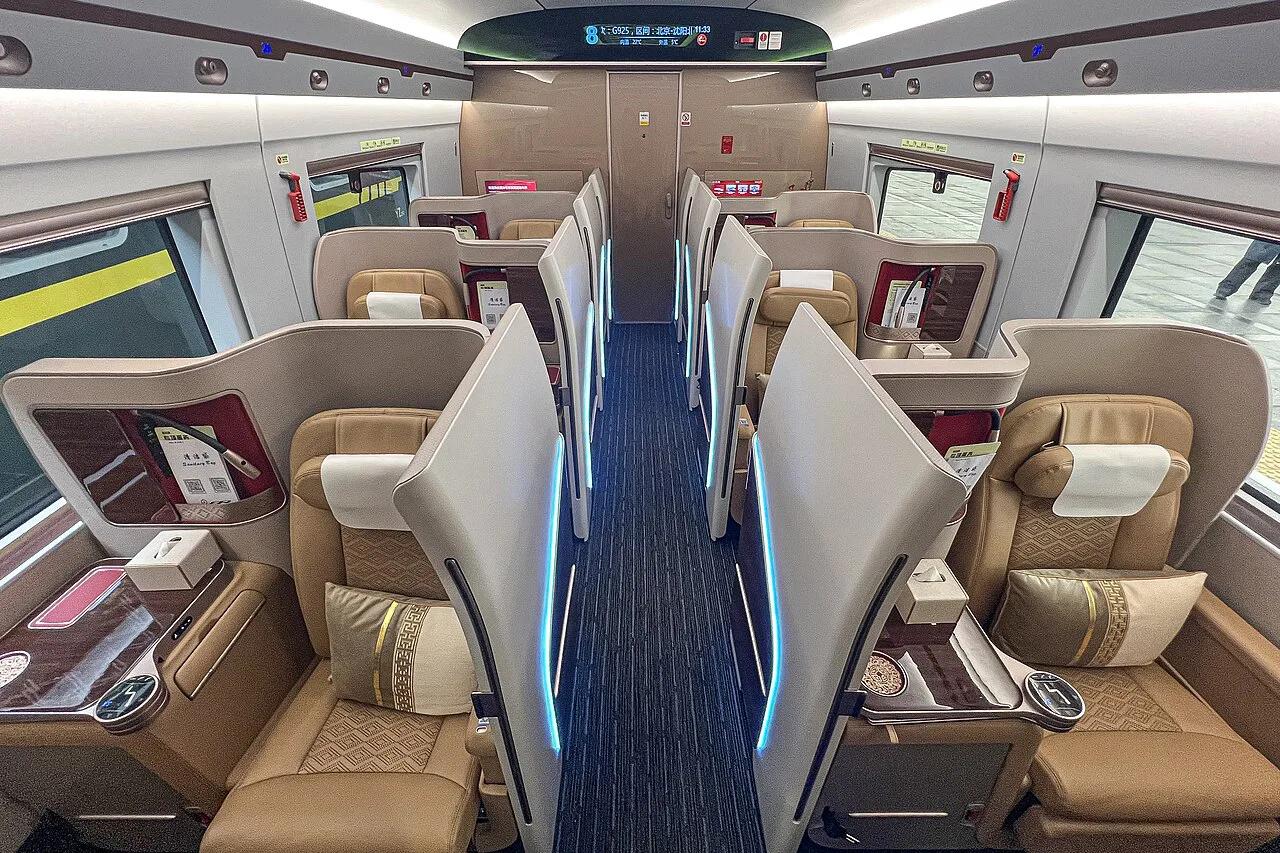
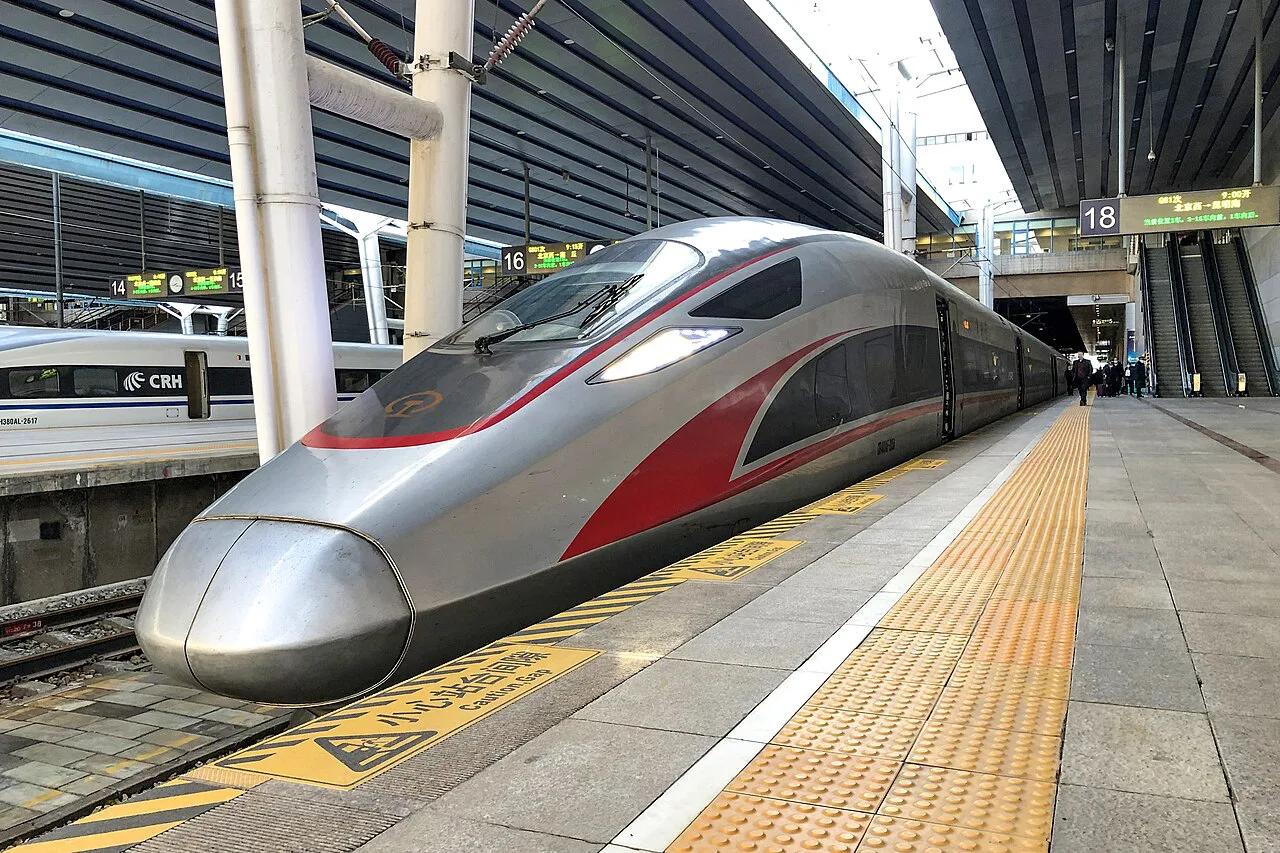
Featured image: N509FZ, CC BY-SA 4.0, via Wikimedia Commons.
What China high speed train business class is
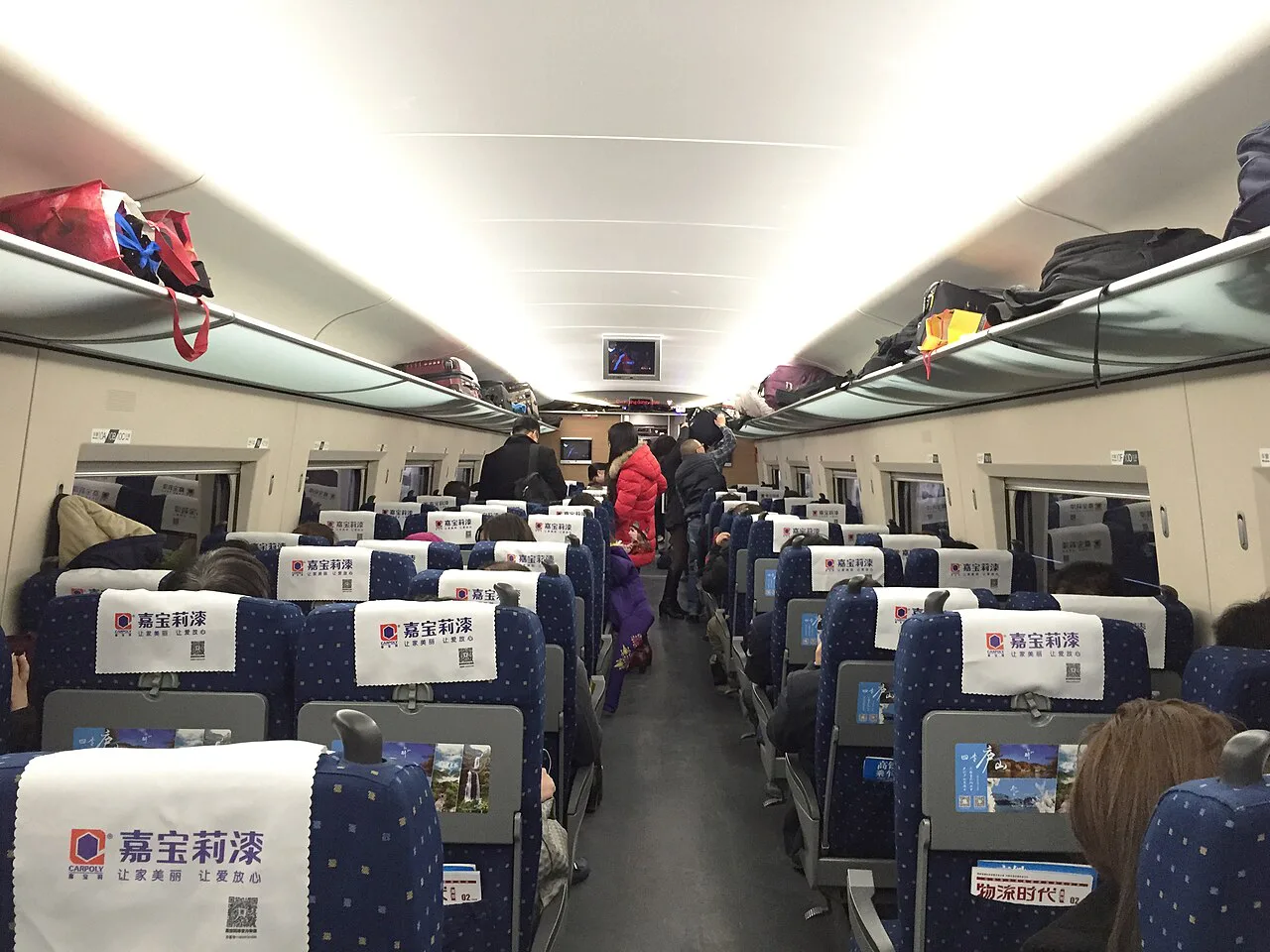
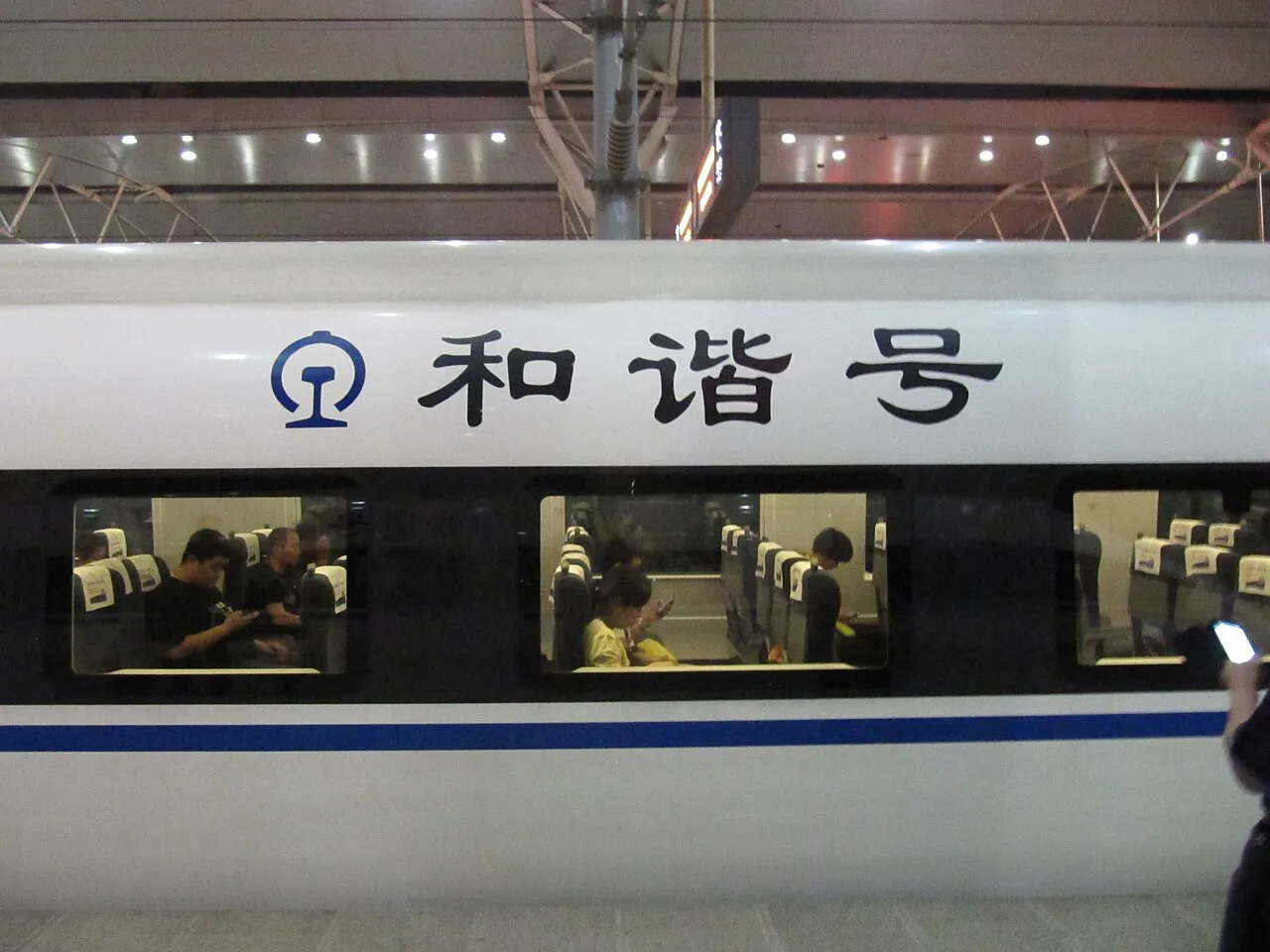
Business class (商务座, shangwuzuo) is sold only on selected G-series trains. Many of those are Fuxing trains, but not every G train carries it. Your booking screen shows which seat classes a given train sells. Chinese rail does not follow the Western order of first, business and economy. Here the ladder runs business, first (一等座), then second (二等座). Our guide to China Train Classes Explained: Second, First, Business, Sleepers covers the full ladder, including slower train types. On 12306 results, each train lists its classes as separate seat lines. A train without business class simply has no such line to book.
Business vs first vs second class: comparison table
Treat this table as a decision aid. Fares move by route and date, so price levels are relative only.
| Class | Seat layout and space | Service extras | Lounge access | Relative price | Best for |
|---|---|---|---|---|---|
| Business (商务座) | Power-reclining leather seats, 2+1 across (Seat61) | Tray meal included (Seat61) | Separate waiting room at some large stations | Highest | Long trips, work, quiet |
| First (一等座) | 2+2 across, wider than second class | Seat only, no meal service listed by Seat61 | General waiting area | Mid | Comfort without the top fare |
| Second (二等座) | 3+2 across | Basic | General waiting area | Lowest | Short trips, tight budgets |
Is business class worth it? Decision matrix by trip type
Journey length decides most of this. A long ride gives you time to use the extra space. A short one does not. The Beijing West to Daxing Airport link takes about 30 minutes (China Highlights lists 29 to 34). That is too short to feel any upgrade. Business class is also a poor fit if your chosen train does not sell it.
Rides of 4+ hours give business class room to pay off, but a late departure leaves less time to enjoy the seat.
| Trip type | Verdict | Reason |
|---|---|---|
| Short city pair | Skip | Little time to use the perks |
| Intercity ride of 4+ hours | Worth considering | More room and rest over a long run |
| Airport link | Skip | About 30 minutes on the Beijing West to Daxing line |
| Family with luggage | First class is usually enough | The 20 kg free allowance is the same in every class |
| Business traveler needing quiet or desk time | Worth it | Fewer distractions on a long run |
Business class lounges and station logistics
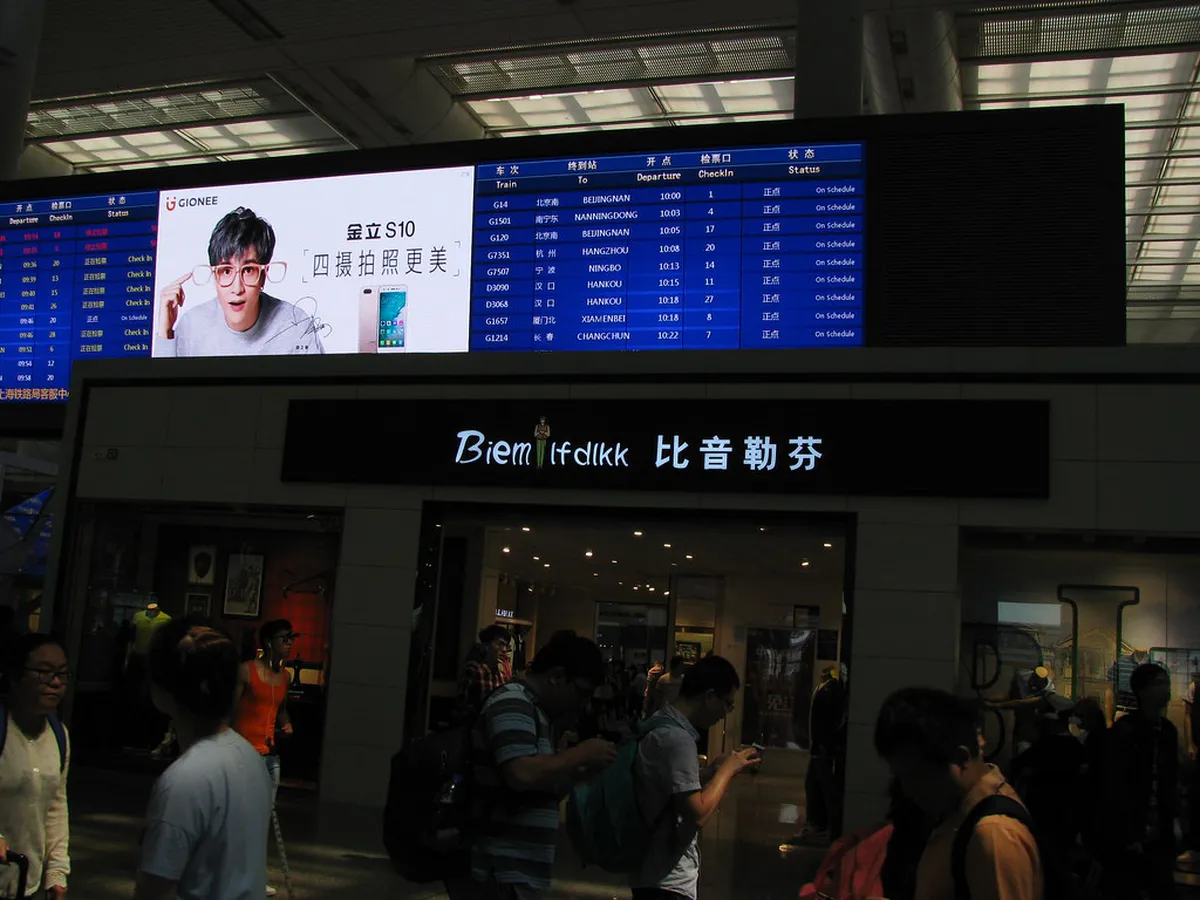
Some big stations have a business class lounge (商务座候车室). Ask three things before you rely on one. Does your ticket include access? When does boarding open? Where is the entrance? Each hub differs, so read the station's own notes. Start with our guide to China Train Stations: How They Work and Which One to Use. China Railway's official site lists station services.
Multi-station cities cause the costliest errors. Beijing has Beijing West and Beijing South. Shanghai has Shanghai Hongqiao and Shanghai Railway Station: Which Station, Metro & Tips. Read the station name on your ticket before you leave your hotel. Our China Railway Map: How to Read the Network and Plan a Route helps you place routes.
How to book business class as a foreign traveler
Tickets are tied to your passport, so enter your name exactly as printed in it. The official 12306 English portal sells tickets directly. Our 12306 app guide walks through the app. Trip.com is the alternative when you want an English flow. Read Trip.com train tickets for the trade-offs.
Read fares on 12306 at booking. Lounge access depends on the station.
Our train booking guide covers the full flow. Travel is ticketless, and you scan your passport at the gate (Seat61). Business seats are few per train. Popular routes can sell out, so book early where your dates are fixed.
Cost and timing trade-offs
Business class sits at the highest price level, first class in the middle, and second class at the lowest. Exact fares in ¥ depend on the route and date, so read them on 12306 at booking. Choose first class when the trip is short, when you travel with several people, or when the fare gap outweighs the time you will spend seated. Choose business class when the ride is long and rest or work matters. Departure time matters too. A morning departure suits a work day on board, while a late train leaves less time to use the seat. For an overnight journey, consider China Sleeper Trains: Classes, Booking & Which to Pick instead.
Luggage, comfort and practical tips
Business class does not change your luggage allowance: adults carry 20 kg free in every class. Our China train luggage guide has the size limits. Arrive at the station early so you can find the right entrance and gate. Keep your passport in hand through ticket checks.
Common mistakes to avoid
Most business class regrets come from planning errors, not from the seat itself.
- Assuming every G train sells business class.
- Buying business class for a trip of about 30 minutes.
- Going to the wrong station in a city with more than one.
- Leaving the passport in your suitcase. It is your boarding pass.
- Expecting lounge access without asking at the station.
Frequently Asked Questions
Is it worth paying for first class on a train?
First class is a sensible middle step when second class feels cramped but business class is more than you need. It suits mid-length trips and travelers with several bags.
How do I book high-speed train tickets in China?
Use 12306 or Trip.com with your passport details. No paper ticket is needed, because you scan your passport at the gate. Our booking guide has the full steps.
Notes on Asia's railways
Optional updates when we revise our train and route guides.
You might also like
Continue reading
More guides you'll find useful