China Train Classes Explained: Second, First, Business, Sleepers
Compare China train classes: second, first and business class on high-speed trains, plus hard and soft sleepers. Learn which to book and when to upgrade.
On this page
Last updated November 2026. China train classes come down to one rule: book second class on daytime bullet trains, and move up only for long, quiet or lie-flat rides. Overnight conventional trains split into hard seat, soft seat and sleeper berths. Use this guide with our hub on 8 Things to Know About Trains in China (2026 Guide) to pick the right ticket before you book.
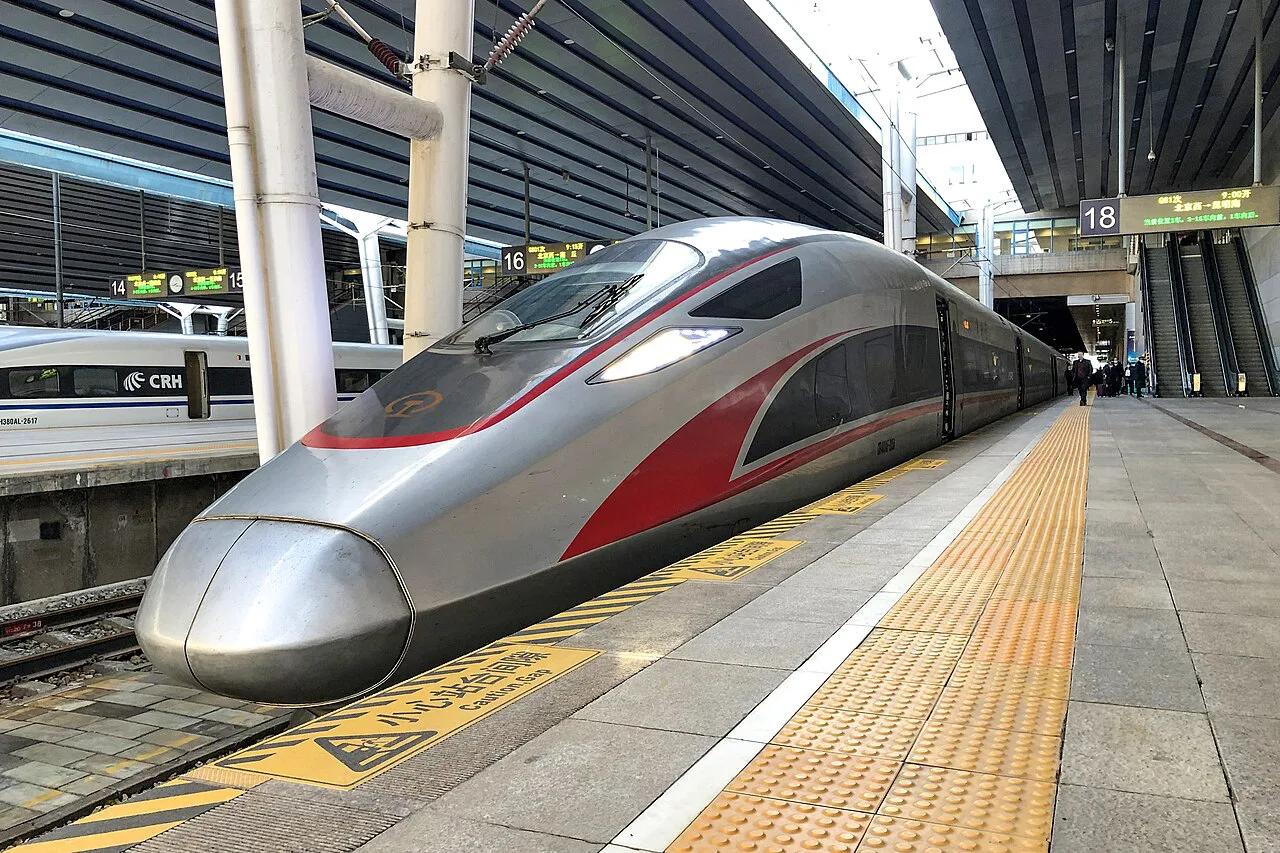
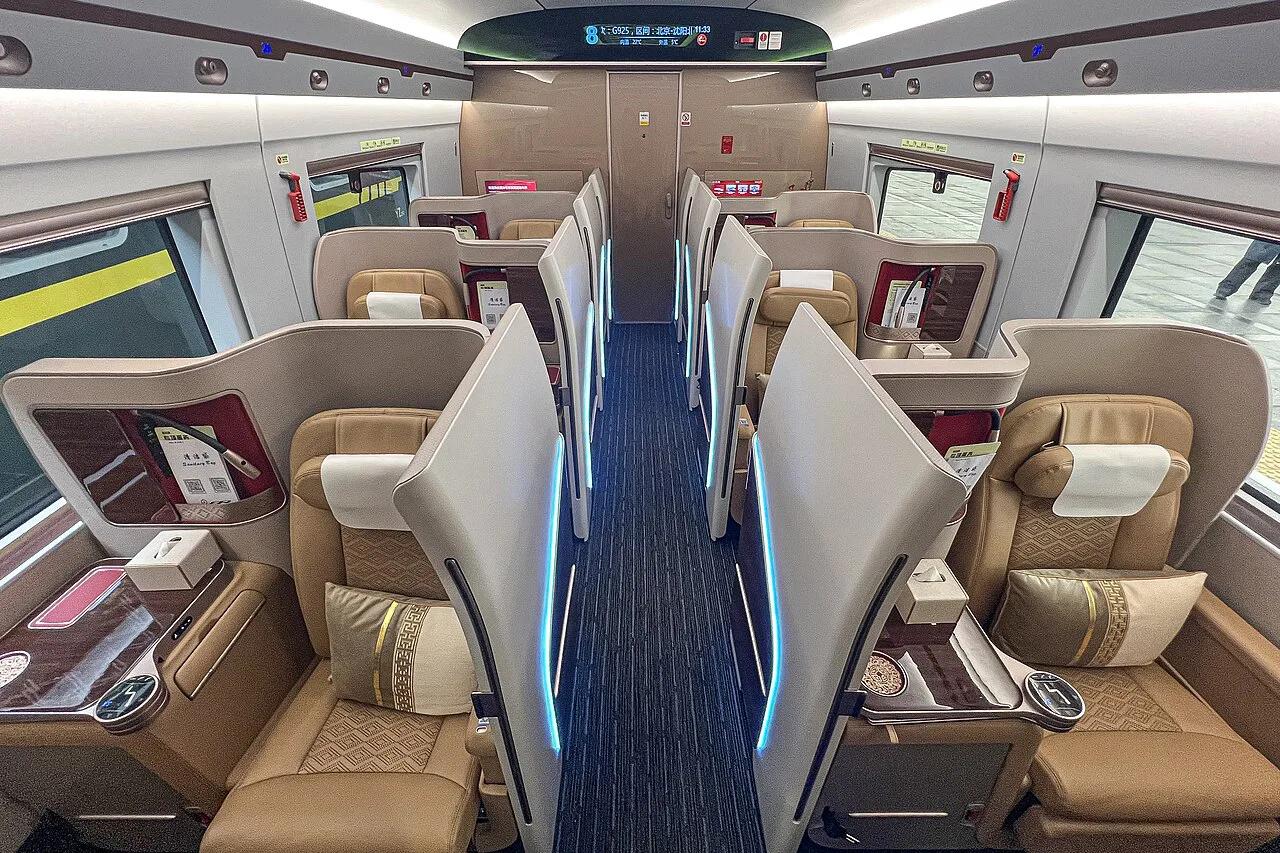
Featured image: N509FZ, CC BY-SA 4.0, via Wikimedia Commons.
China Train Classes: The Quick Answer
For most daytime trips, second class (二等座) on a G, D or C train is the practical choice. First class (一等座) suits rides of 4+ hours and anyone who wants a quieter car. Business class (商务座) is the power-reclining leather seat for travelers who want maximum space. On overnight conventional trains, soft sleeper (软卧) beats hard sleeper (硬卧) for privacy. Our guide on how to book train tickets covers the purchase steps.
- Day ride under 2 hours: second class.
- Day ride of 4+ hours: first class if you want space, second class if budget matters.
- Overnight on a conventional train: hard sleeper on a budget, soft sleeper for privacy.
- Holiday week: book whichever class is still available, and book early.
- Never plan a 10+ hour ride in hard seat.
Train Types First: What the Letters Mean (G, D, C, Z, T, K)
Train numbers start with a letter, and that letter decides which classes exist. G trains are the fastest bullet trains, with top speeds up to 350 km/h. D trains reach about 250 km/h. C trains link neighboring cities, such as Beijing–Tianjin, at roughly 200 km/h or less. Conventional trains are slower and carry the sleeper berths. Fuxing is the name of a modern bullet-train family, and some of its sets add premium or special seats. Our Fuxing train guide covers the models.
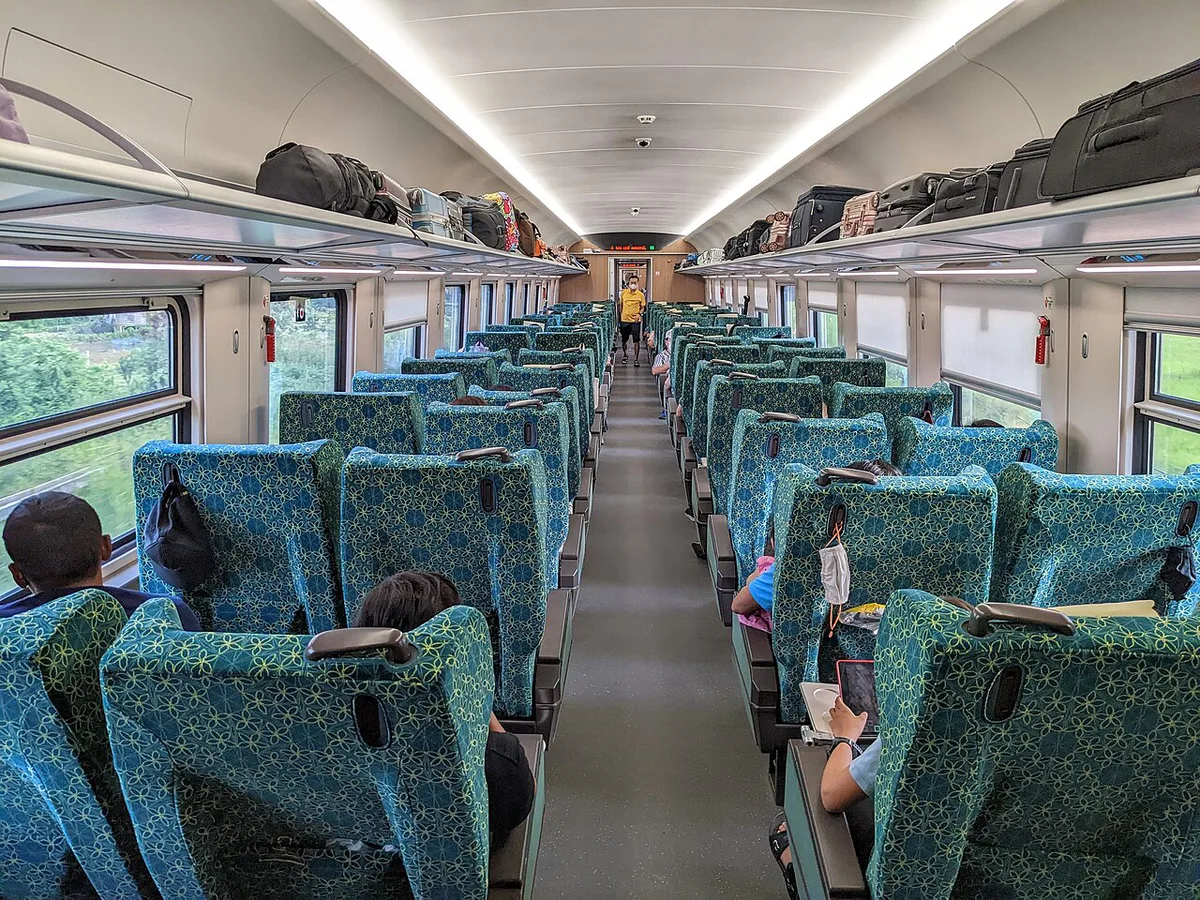
- G: high-speed, up to 350 km/h.
- D: high-speed, up to 250 km/h, some overnight.
- C: intercity, short hops between neighboring cities.
- Z: direct express, around 160 km/h, few or no stops.
- T: express, around 140 km/h, limited stops.
- K: fast train, around 120 km/h, more stops.
Seat Classes on High-Speed Trains
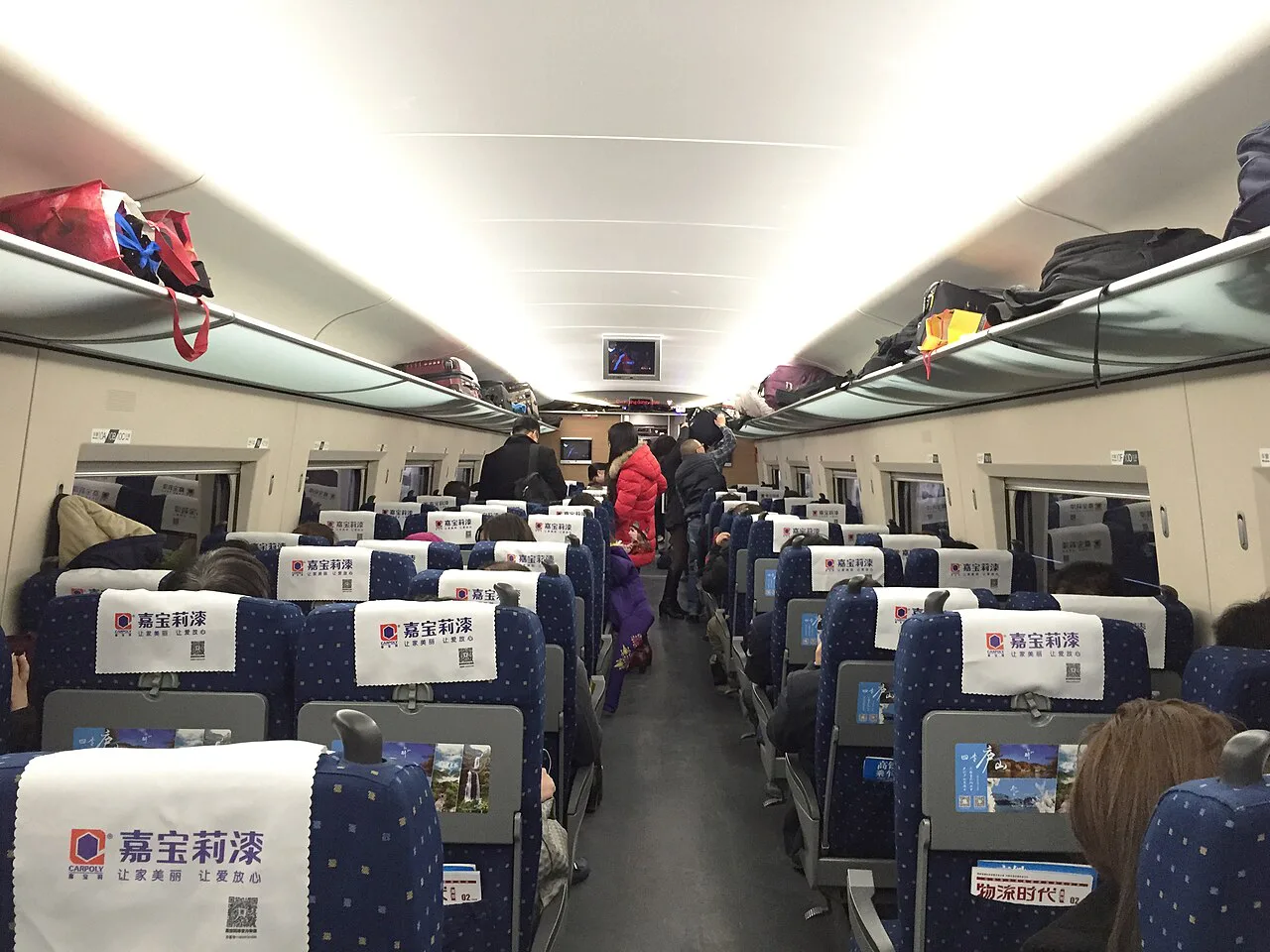
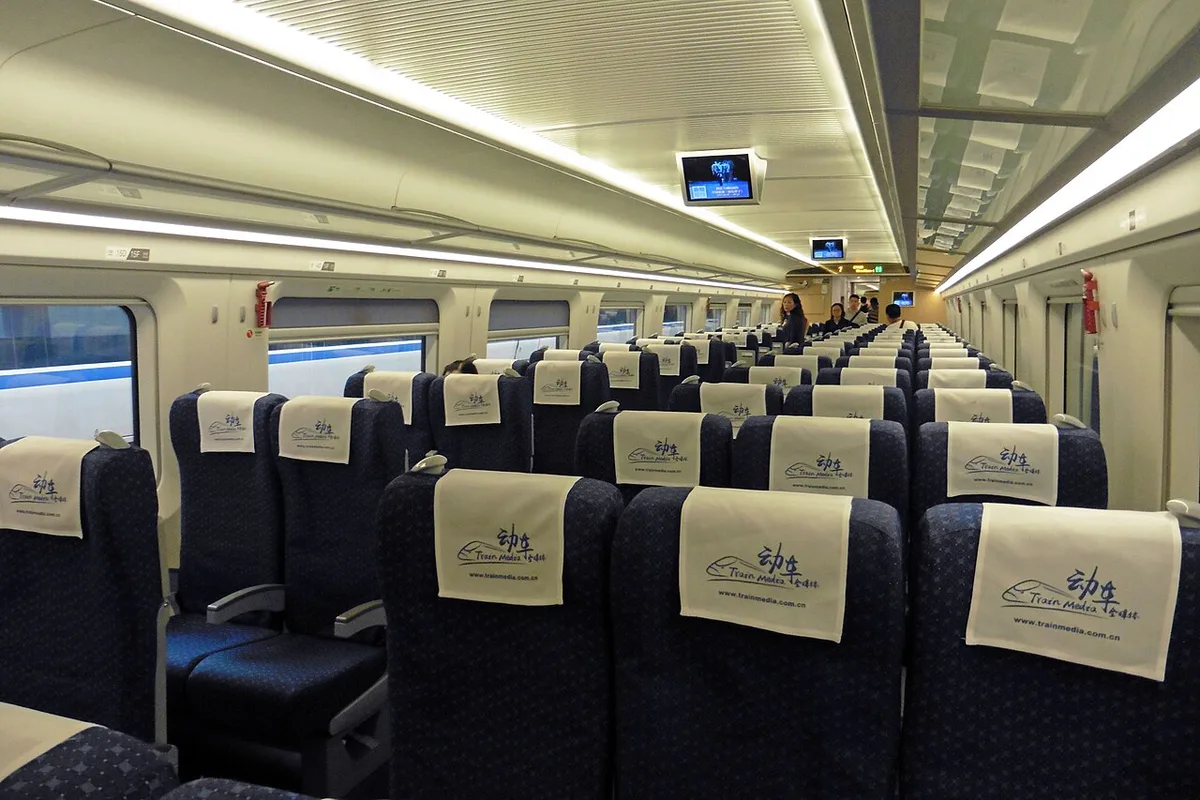
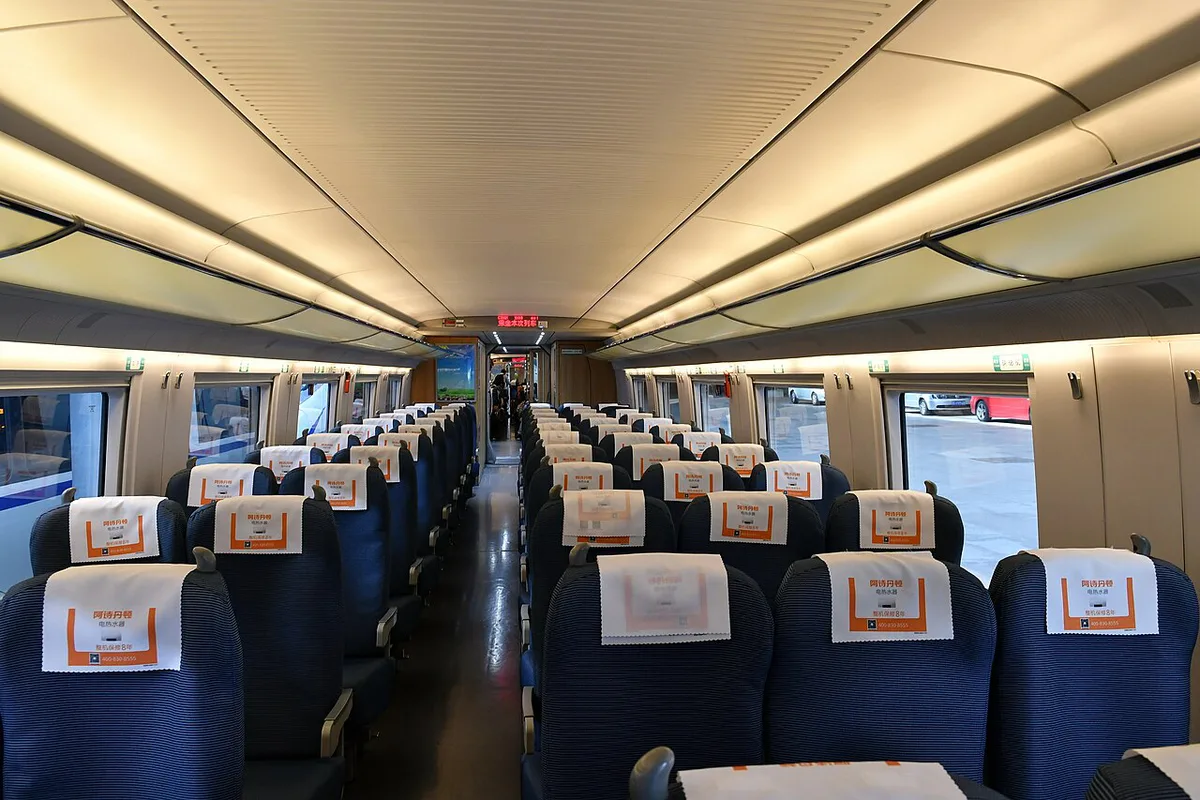
Second class has a 3+2 layout, which makes it the most common and most affordable bullet-train seat. It fits solo travelers, couples and short hops. First class uses 2+2 seating with more width, legroom and a quieter car. Business class uses 2+1 or 1+1 seating with power-reclining leather seats and a tray meal, and it is not on every G train (Seat61). Some trains list extra tiers between first and business, so read the class list for your specific train number on China's official rail booking site. Seat61 describes a few "premium" seats in the end compartment of some trains without business class. Our business class deep dive covers service details.
Seat and Berth Classes on Conventional Trains
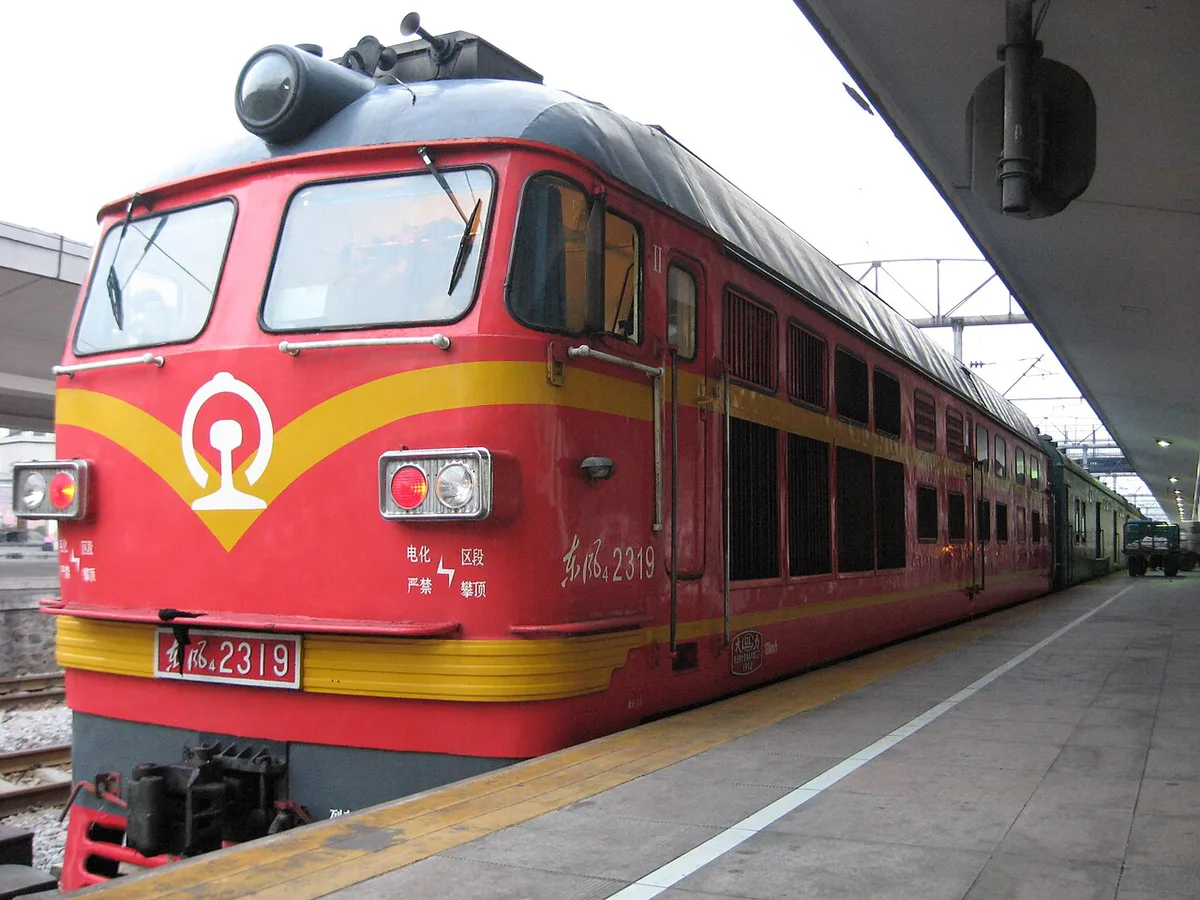
Conventional Z, T and K trains offer five choices. Hard seat (硬座) is upright and the cheapest, but crowded on popular routes. Soft seat (软座) adds padding and space. Hard sleeper (硬卧) is an open carriage with 6 berths per bay in three tiers. Soft sleeper (软卧) is a lockable compartment with 4 berths. Deluxe soft sleeper (高级软卧) is a 2-berth compartment on select Z trains. Our sleeper train guide goes deeper.
- Lower berth: easiest to reach, but passengers sit on it by day.
- Middle berth: a balance of access and privacy.
- Upper berth: more headroom and privacy, plus a harder climb.
- Standing ticket: sold only after seats run out, with no seat guaranteed. Avoid it.
China Train Classes Compared
Use this table as a first filter. Availability varies by train number.
| Class | Chinese name | Typical train types | Layout | Who it suits | Trade-off |
|---|---|---|---|---|---|
| Second class | 二等座 | G, D, C | 3+2 | Solo travelers, short hops | Tighter in the middle seat |
| First class | 一等座 | G, D, C | 2+2 | Couples, longer rides | Costs noticeably more |
| Business class | 商务座 | Some G trains | 2+1 or 1+1 | Long daytime rides, comfort seekers | Highest fare, limited trains |
| Hard seat | 硬座 | Z, T, K | Upright bench | Short budget trips | Crowded, tiring overnight |
| Soft seat | 软座 | Z, T, K | Padded seat | Mid-length conventional trips | Rarely worth it over a sleeper |
| Hard sleeper | 硬卧 | Z, T, K | 6 berths, open | Budget overnight | Little privacy |
| Soft sleeper | 软卧 | Z, T, K, some D | 4-berth compartment | Overnight, families, light sleepers | Costs more than hard sleeper |
| Deluxe soft sleeper | 高级软卧 | Select Z | 2-berth compartment | Couples overnight | Few trains carry it |
Which Class Should You Book?
Match the class to the journey length first, then to your group. Short hops need little comfort. Long day rides repay a first-class upgrade. Our China Railway Map: How to Read the Network and Plan a Route helps you judge distances.
| Situation | Recommended | Backup | Avoid |
|---|---|---|---|
| Solo on a budget | Second class | Hard sleeper overnight | Standing ticket |
| Couple | First class on 4+ hour rides | Second class | Hard seat overnight |
| Family with kids | Second class, seats together | Soft sleeper overnight | Separate bookings |
| Business traveler | Business or first class | Second class | Late booking on holidays |
| Overnight leg | Soft sleeper | Hard sleeper | Hard seat |
| Under 1.5 hours | Second class | First class | Business class |
| Holiday week | Any class still open | Another departure time | Waiting for cancellations |
- Beijing–Shanghai takes roughly 4.5 hours on a G train, so first class pays off. Beijing South and Shanghai Hongqiao station are the usual pairing, so check your ticket.
- Shanghai–Hangzhou takes about 1 hour. Second class is plenty.
- Shenzhen–Guangzhou takes about 30–40 minutes. Second class works, and Guangzhou South is a common arrival point.
- Xi'an–Chengdu takes roughly 3–4 hours. First class is a reasonable treat, and you may use Xi'an North and Chengdu East.
- Chengdu–Chongqing runs roughly 1–1.5 hours. Second class again.
- Beijing–Shanghai timings are indicative. Always read the schedule for your own train.
Is the Upgrade Worth It?
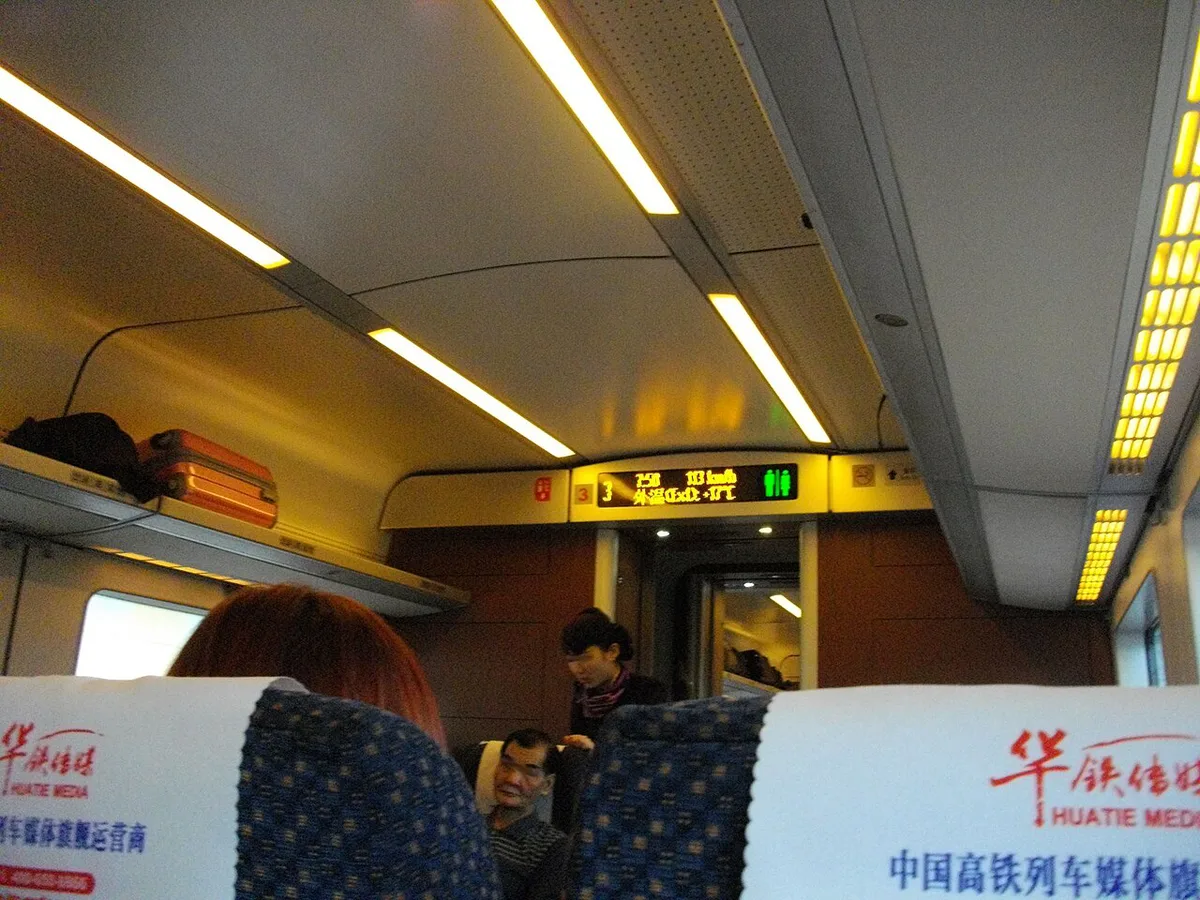
Second to first class is worth it on rides over 3–4 hours, when you want a quieter car or a 2+2 layout. It is rarely worth it under 90 minutes. First to business class is worth it on a long day ride if you value reclining space and a quieter lounge at big stations. Hard to soft sleeper is worth it for privacy and a lockable compartment. A daytime bullet train plus a hotel night often beats a sleeper if you want a proper bed, though a sleeper saves a night's lodging. Our business class guide helps you weigh the top tier.
Beijing–Shanghai takes roughly 4.5 hours on a G train, past the 3–4 hours where a first-class upgrade starts to pay off.
Tickets, Boarding, and Station Logistics by Class
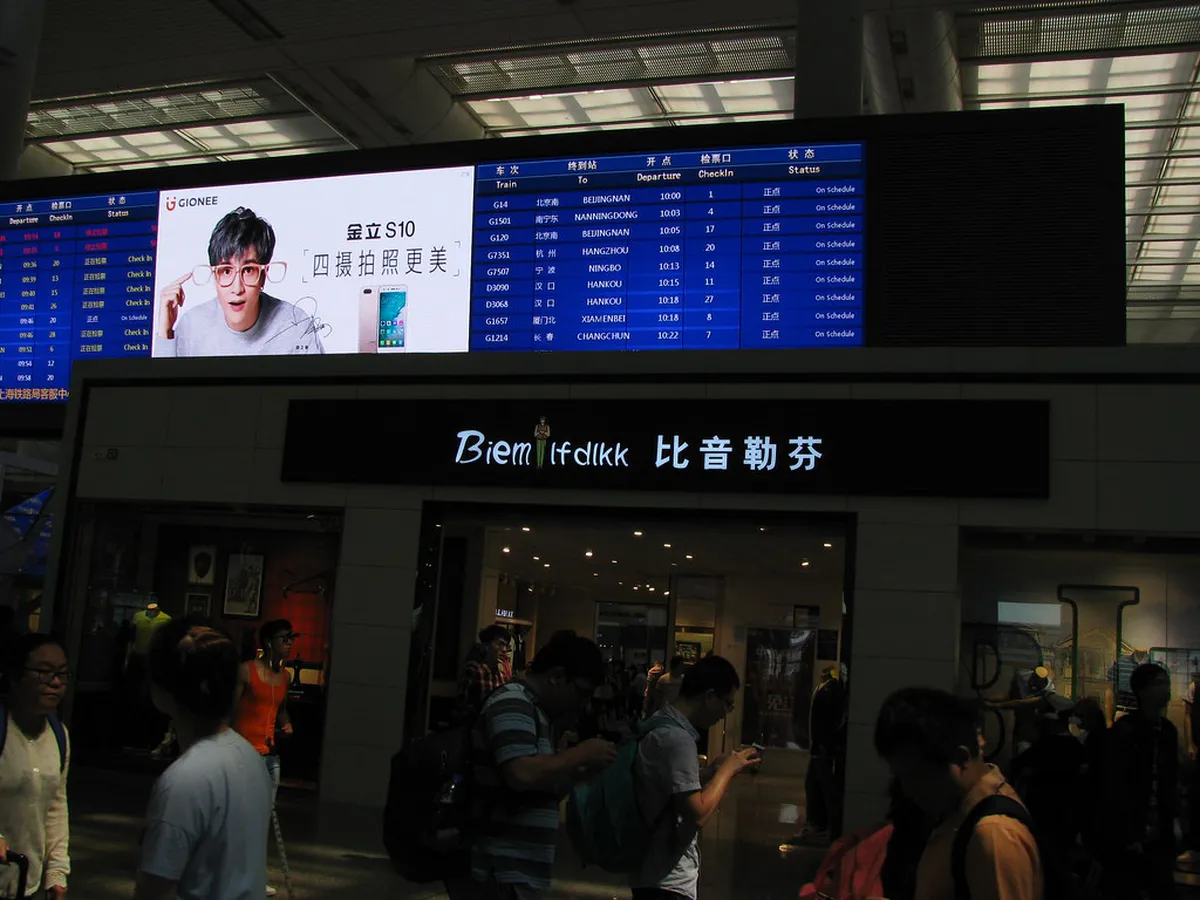
China uses real-name ticketing, so your passport is your boarding document on e-ticket routes. An itinerary sheet is not a ticket. Tickets go on sale 15 days before departure (Seat61). Gates close about 5 minutes before departure, so aim for 45 minutes at a large hub and 30 at a small station (China Highlights). Our 12306 app guide covers changes and refunds. Some travelers book through Trip.com for train tickets, and fees differ from the official channel. Large stations have a separate waiting room for business class. Many cities have several stations, so use our station guide to pick yours. Pack with our luggage guide in mind: adults carry 20 kg free.
Tickets go on sale 15 days before departure, so a holiday-week trip needs its class chosen early, not on the day.
Traveling with Children
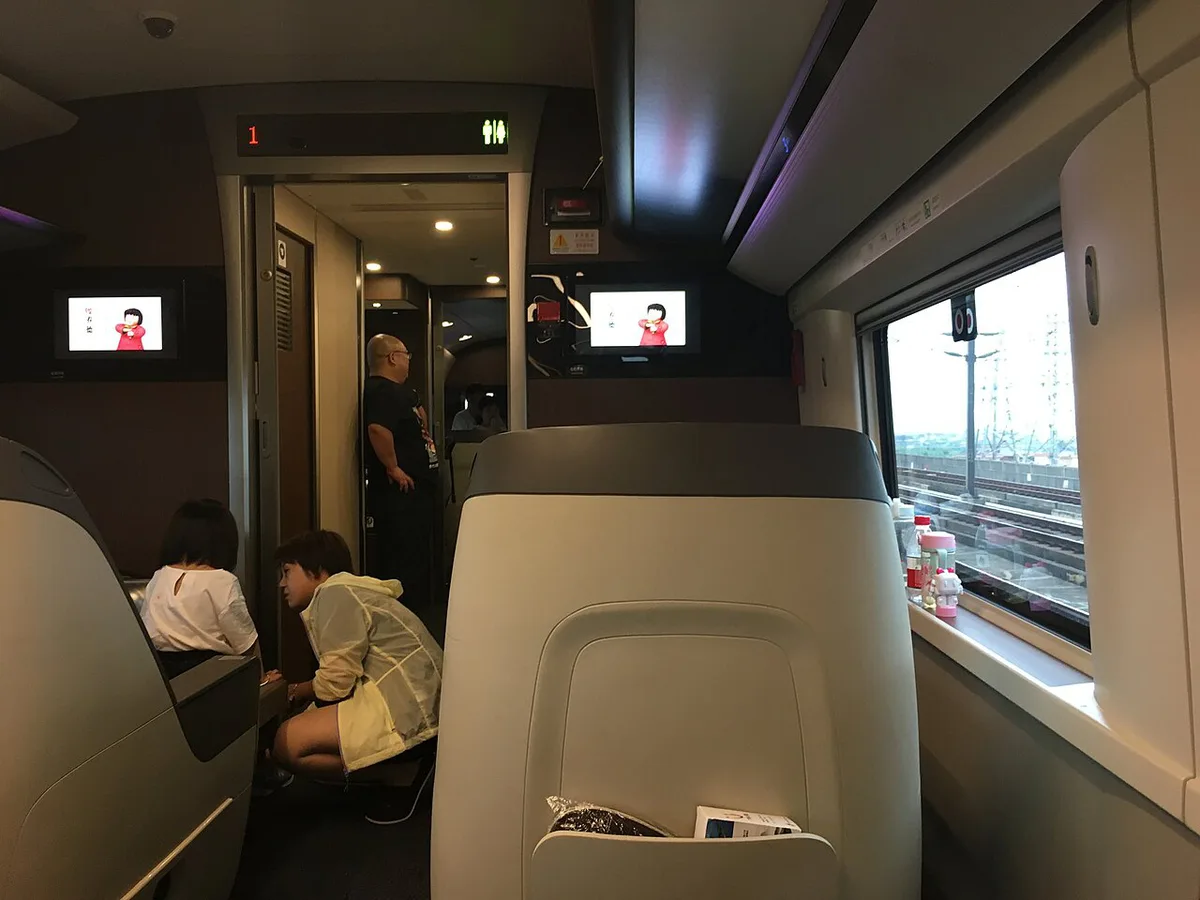
Child fares follow age bands. Since January 2023, children under 6 travel free with an adult, one child per adult, without their own seat (Seat61). Children under 14 pay half fare and get a seat, and from 14 a full adult ticket applies. Age, not height, sets the fare. Book early to sit together, and keep everyone in a single booking.
Common Mistakes
A few errors cause most train-class regrets. Avoid them and your trip runs smoother.
- Booking hard seat for a 10+ hour ride.
- Assuming every G train has business class.
- Not checking which class is left on holiday dates.
- Treating the itinerary sheet as a ticket.
- Picking a berth without weighing lower, middle and upper trade-offs.
- Choosing a seat beside the restrooms when a quieter row is open.
How to Pick Your Exact Seat
When the booking screen offers seat selection, choose the position before paying. Second Class normally uses a 3+2 layout. A window seat suits travelers who want a wall to lean on or scenery. An aisle seat is easier for bathroom breaks and stretching. On the three-seat side, the middle seat is the least comfortable option.
First Class usually has a 2+2 layout, so it is simpler for couples or parents traveling with one child. Book seats in the same row within one reservation where possible. Business Class uses 2+1 or 1+1 seating, which gives solo travelers more personal space.
- Pick a window for sleeping or uninterrupted views.
- Pick an aisle if you expect to move often.
- Choose a row away from restrooms and carriage doors when a quieter seat is available.
Seat maps and available positions differ by train number. Read the final selection screen before you confirm the ticket.
Frequently Asked Questions
Can foreigners take trains in China?
Yes. Foreign visitors can buy real-name tickets with a valid passport. The same passport is used to board on e-ticket routes.
What are the differences between Chinese D-trains and G-trains?
G trains are faster, with top speeds up to 350 km/h. D trains reach about 250 km/h and may run on mixed lines. Both offer second and first class.
Notes on Asia's railways
Optional updates when we revise our train and route guides.
You might also like
Continue reading
More guides you'll find useful