
Beijing to Great Wall: Best Section, Transport & Timing
How to get from Beijing to the Great Wall: compare Mutianyu and Badaling, tour vs public bus vs taxi vs train, timing, and cost trade-offs.
On this page
Last updated November 2026: the simplest beijing to great wall plan is a full day at Mutianyu, about 75 km from the city and 1.5–2 hours each way. Leave between 7:30 and 8:30 AM and plan 4–5 hours on site, including the descent. Badaling is the rail-served alternative, reached by the S2 line from Beijing North.
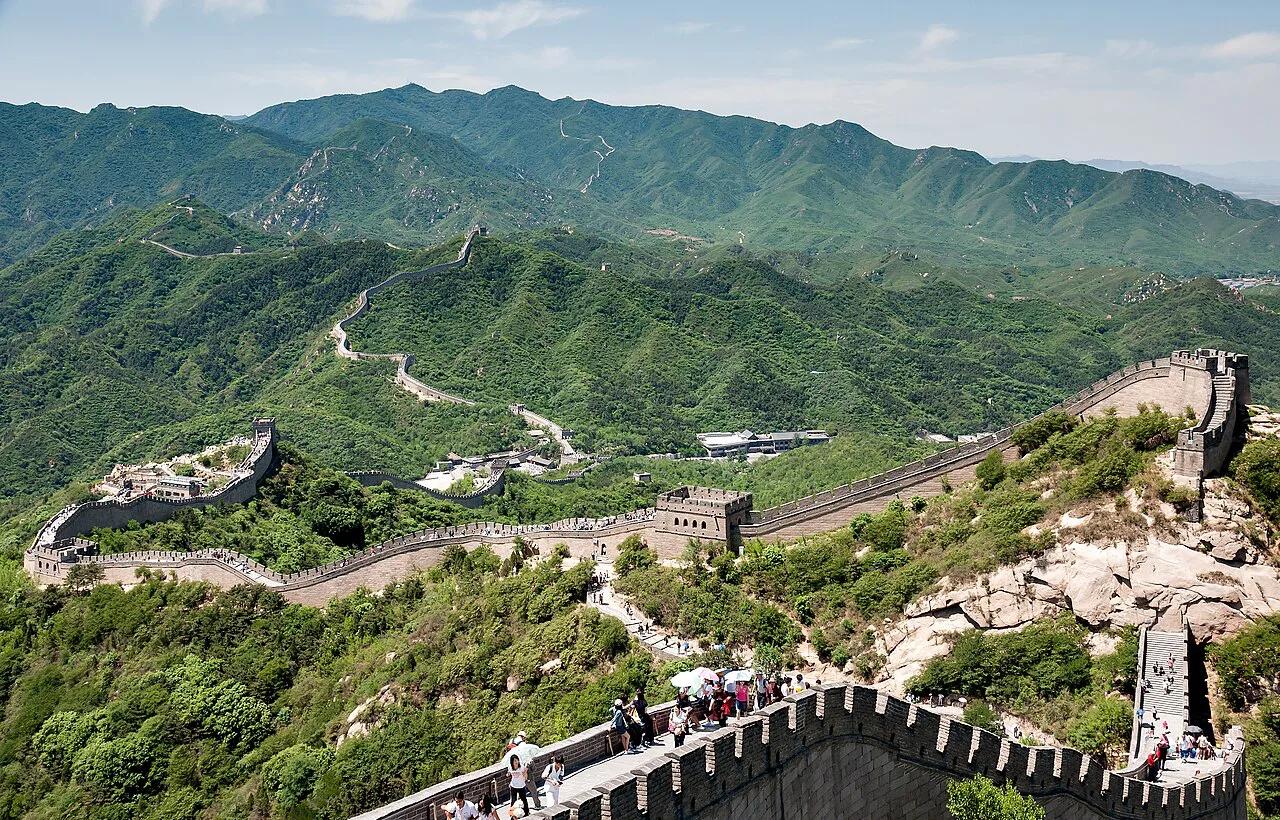
Featured image: CEphoto, Uwe Aranas, CC BY-SA 3.0, via Wikimedia Commons.
How Far Is the Great Wall from Beijing? Sections Compared
Most Great Wall sections used for day trips sit roughly 60 to 140 km from central Beijing. One-way travel runs 1.5 to 3 hours depending on traffic. Mutianyu is the usual first-timer pick because it balances travel time, restored paths, and lighter crowds than Badaling. Jinshanling and Simatai take 2.5–3 hours each way, so they suit hikers more than one-day visitors.

| Section | Distance from Beijing | One-way time | Crowds | Best for |
|---|---|---|---|---|
| Mutianyu | About 75 km northeast | 1.5–2 hours | Lighter, especially on weekdays | First-timers, families |
| Badaling | About 70 km northwest | Shortest by road; train available | Heaviest | Short visits, limited mobility |
| Huanghuacheng | About 80–90 km north | Longer, less direct transport | Quieter | Lakeside scenery, fit walkers |
| Jinshanling / Simatai | Farther out | 2.5–3 hours | Light | Experienced hikers |
Beijing to Great Wall Transport: Tour, Shuttle, Taxi, or Public Bus
Four options reach Mutianyu. Prices below are reported ranges, checked November 2026, so treat them as planning figures. Public transport is cheapest but slowest, at 3–4 hours one way with transfers. A private car takes the 1.5–2 hours of the drive and nothing more.
| Mode | Cost level | Flexibility | Effort | Return reliability |
|---|---|---|---|---|
| Tour or shuttle | Mid | Low | Low | High |
| Private car | Highest, split by group | High | Low | High |
| Public bus plus transfer | Lowest | Medium | High | Lowest |
| Train to Badaling | Low | Medium | Medium | Medium |
- Tour or shuttle: pre-booked tickets, no navigation, fixed pickup point in central Beijing. Best for first-timers who want the least effort.
- Private car or taxi: reported at ¥600–¥800 round trip. Agree the fare and waiting time in advance. Best for families and small groups.
- Public bus: Bus 916 Express from Dongzhimen to Huairou takes about 1–1.5 hours at roughly ¥12–¥15. Transfer at Huairou North Avenue to a minibus (about ¥5–¥10) or a taxi (about ¥50–¥80).
- Badaling by train: see the next section.
Beijing to Badaling by Train
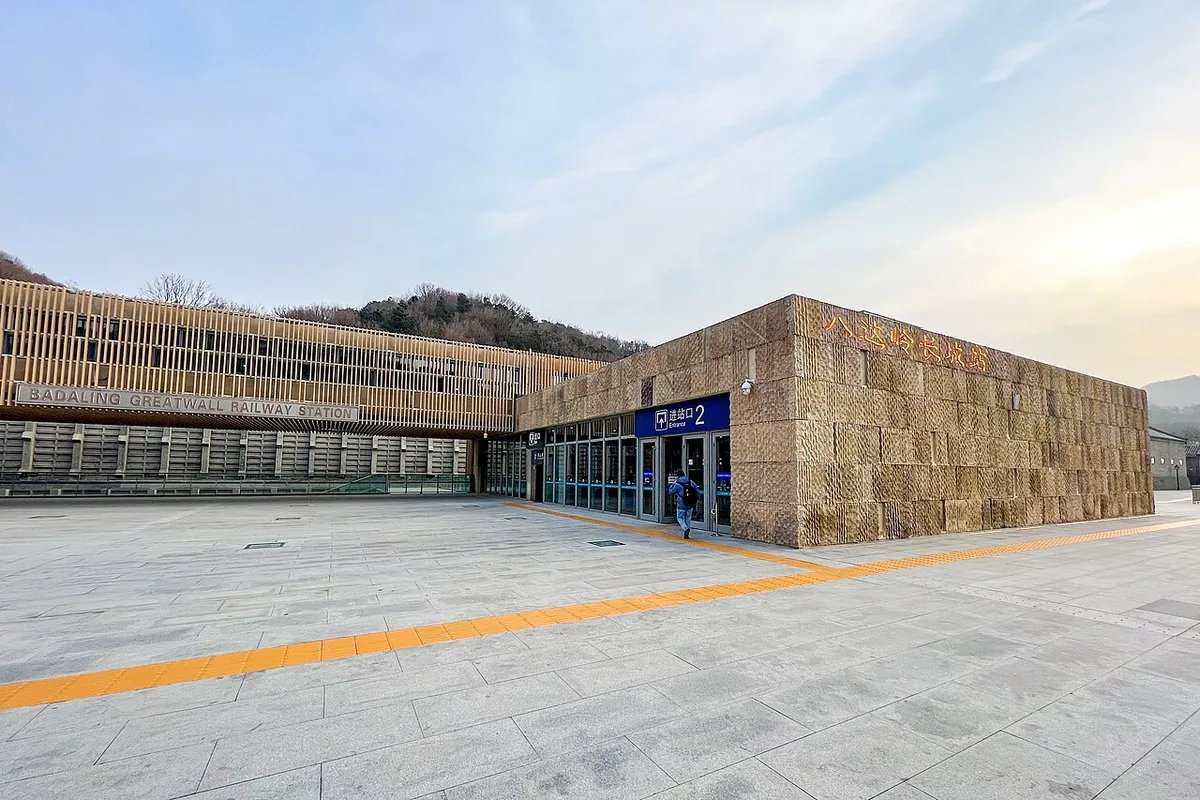
Badaling is the one section with a direct rail link. Take the S2 line from Beijing North toward Yanqing and get off for Badaling. Book through the official China Railway ticketing site, and expect to show your passport. Our China high-speed rail guide explains how rail booking works. The official Badaling site lists current tickets and opening hours. Trains avoid road traffic, but Badaling is the most crowded section, so arrive early.
Guided Tour vs Independent: Which Is Right for You?
A tour removes ticket queues, route-finding, and language problems, and a guide adds historical context. Going independent costs less and lets you stay on the Wall as long as you like. Choose a tour if this is your first trip to China or you travel with older relatives. Go independent if you speak some Mandarin or want a sunrise start. Anyone who dislikes uncertain return legs should skip the Bus 916 route. Evening buses back from Huairou leave early, so a missed connection can strand you.
Suggested One-Day Itinerary from Beijing (Mutianyu)
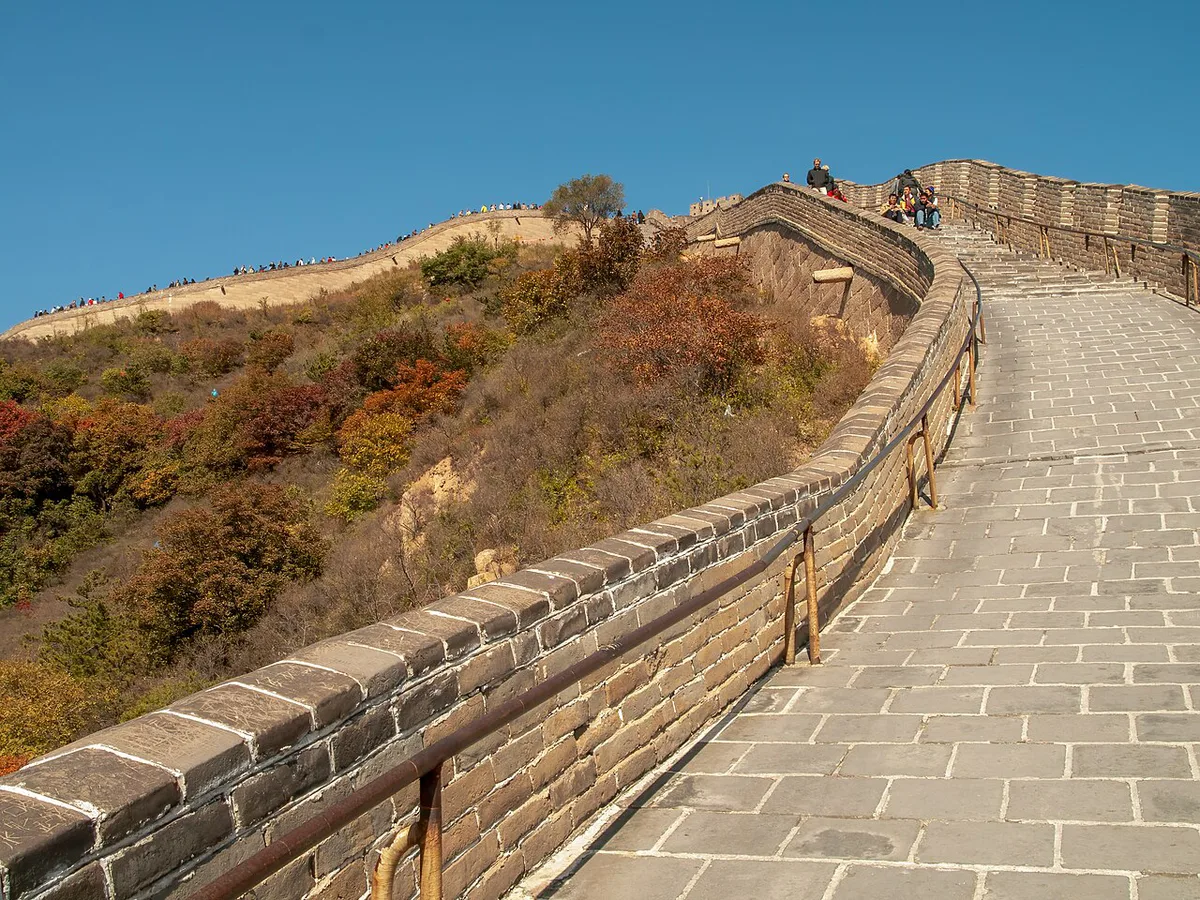
This timeline gives about 2–2.5 hours on the Wall. Turn back when your return window slips past mid-afternoon, since evening traffic lengthens the drive. On a half-day, skip lunch and descend by the toboggan right after the Watchtower 14–20 walk. On a late start, take the cable car up and walk only toward Watchtower 20.
Toboggan descent covers roughly 1,580 meters, so the half-day plan can finish right after the Watchtower 14–20 walk.
- 7:30–8:30 AM: depart central Beijing.
- 9:30–10:00 AM: arrive at Mutianyu and ride up.
- 10:00 AM–12:30 PM: walk between Watchtowers 14 and 20.
- 12:30–1:30 PM: descend by toboggan, cable car, or chairlift.
- 1:30–2:30 PM: lunch in the base area.
- 3:30–6:00 PM: return, reaching central Beijing around 5:30–6:30 PM.
Tickets, Cable Car, Chairlift, and Toboggan
Mutianyu offers three ways up. The enclosed cable car lands near Watchtower 14. The open chairlift lands near Watchtower 6, where the toboggan starts. Hiking from the base takes about 30–45 minutes of stairs. The toboggan track runs roughly 1,580 meters, and single-person carts have a hand brake. Watchtower 20 is the usual quieter turnaround. Ticket prices, hours, and toboggan age or weather rules change, so read them on the official scenic-area site before you book.
Best Time to Go and Crowd Avoidance
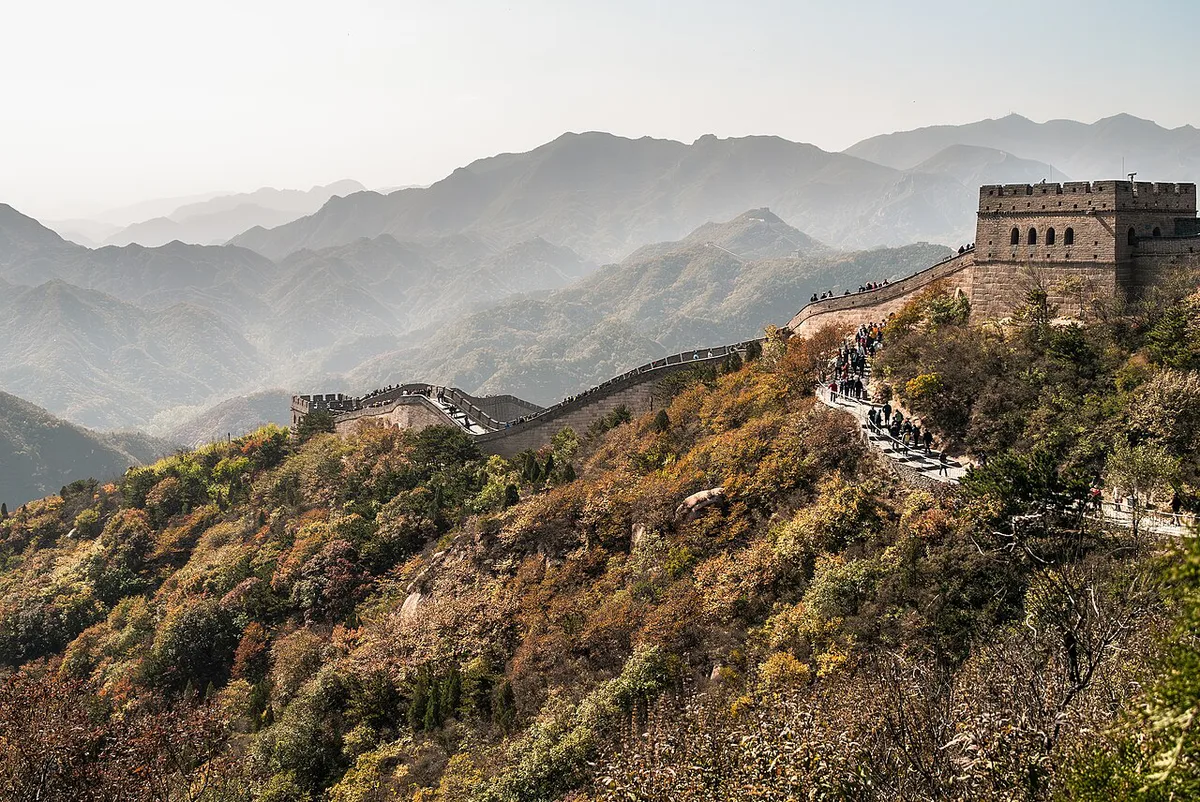
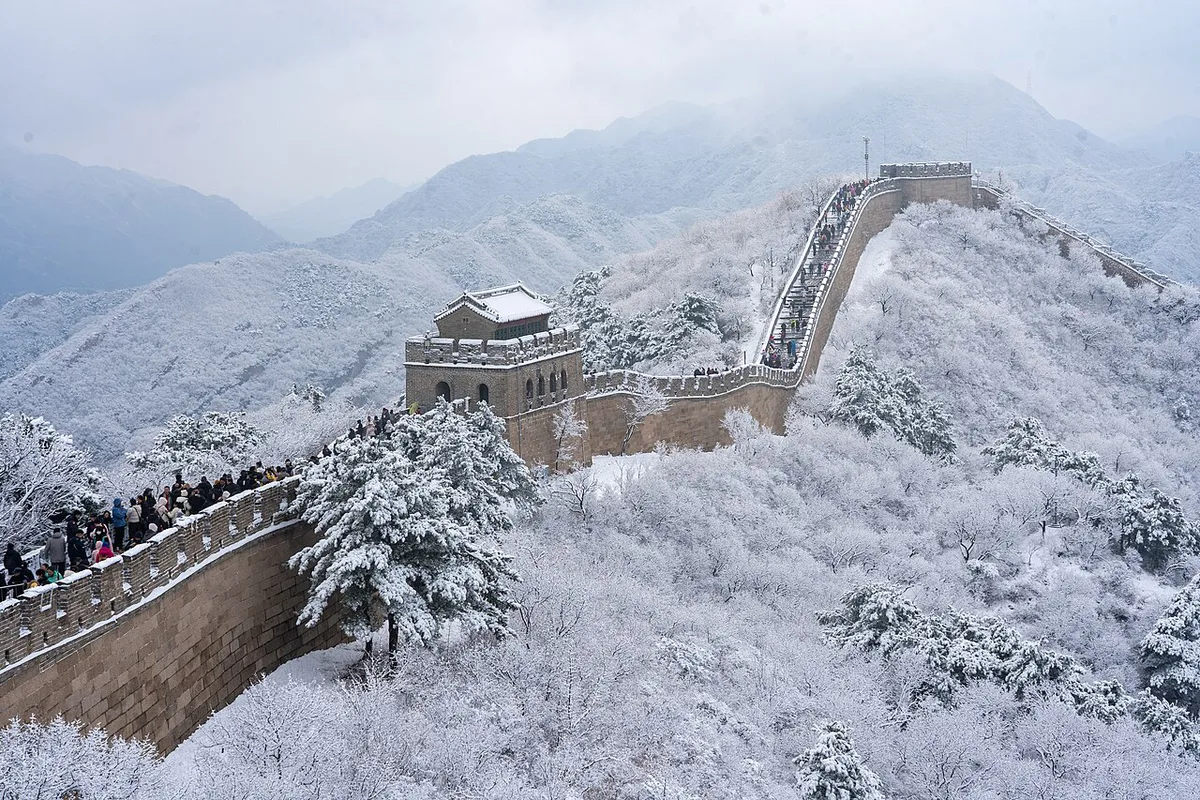
Mutianyu and Badaling both get noticeably crowded after about 10:30 AM. Weekdays, especially Monday to Thursday, are calmer. Spring (April–June) and autumn (September–November) are the most comfortable seasons. Winter is quiet but cold. Avoid Chinese New Year, Labor Day (May 1–3), and National Day Golden Week (October 1–7). On rain or poor-air days, postpone if you can, since views and footing both suffer.
Crowds at Mutianyu and Badaling build after 10:30 AM, which is why the timeline's 9:30–10:00 AM arrival matters.
Accessibility, Safety, and What to Bring
Mutianyu has wide stone paths and handrails, and the cable car helps visitors with limited mobility. Sections beyond Watchtower 14 turn steeper and uneven. Wear shoes with good grip, and carry at least one bottle of water per person. Bring a power bank, because mobile coverage on the Wall can be intermittent. Download offline maps beforehand. Carry your passport for ticket checks. There is no full-service dining on the Wall, so eat in the base area, and look up local emergency numbers before you go.
Common Mistakes First-Time Visitors Make
Each of these has a simple fix.
- Leaving after 9 AM: depart by 7:30–8:30 AM to beat the 10:30 AM crowds.
- Choosing Jinshanling for a one-day trip: pick Mutianyu unless you hike regularly.
- Forgetting your passport: pack it the night before.
- Ignoring return time: set a hard turnaround by early afternoon.
- Wearing smooth-soled shoes: bring trainers with grip.
- Planning to eat on the Wall: lunch at the base.
Where to Go Next
With extra days, Chengde from Beijing is the nearest regional trip. Heading west, Pingyao by train from Beijing adds a walled old town. For a longer rail leg, see the Beijing to Xi'an route.
Costs and Budget by Traveler Type
Your total depends mainly on transport and whether you use the lifts. For an independent visitor, Bus 916 Express costs about ¥12–¥15 to Huairou, followed by a ¥5–¥10 minibus or a ¥50–¥80 taxi to Mutianyu. That makes the public-transport route cheapest, but it can take 3–4 hours each way with transfers.
A private car is usually better value when several people share it. Reported round-trip car prices are ¥600–¥800, so agree both the waiting time and return pickup before leaving Beijing. Add the scenic-area entry ticket, any cable car, chairlift, or toboggan ticket, plus lunch and water from the base area.
- Solo budget: public transport + entry + food; allow extra time for the Huairou transfer.
- Couples or families: compare shared car cost against separate shuttle tickets and lift choices.
- Groups: divide the ¥600–¥800 car fare, then confirm whether parking and waiting are included.
Lift and entry prices change, so check the official Mutianyu scenic-area site before booking.
Frequently Asked Questions
How far is the Great Wall of China from Beijing?
Popular sections lie roughly 60 to 140 km from central Beijing. Mutianyu is about 75 km away and takes 1.5–2 hours each way. Badaling is about 70 km northwest.
Which city in China is closest to the Great Wall?
Beijing is the closest major city. Mutianyu and Badaling both work as day trips from the capital.
Notes on Asia's railways
Optional updates when we revise our train and route guides.
You might also like

Continue reading
More guides you'll find useful