
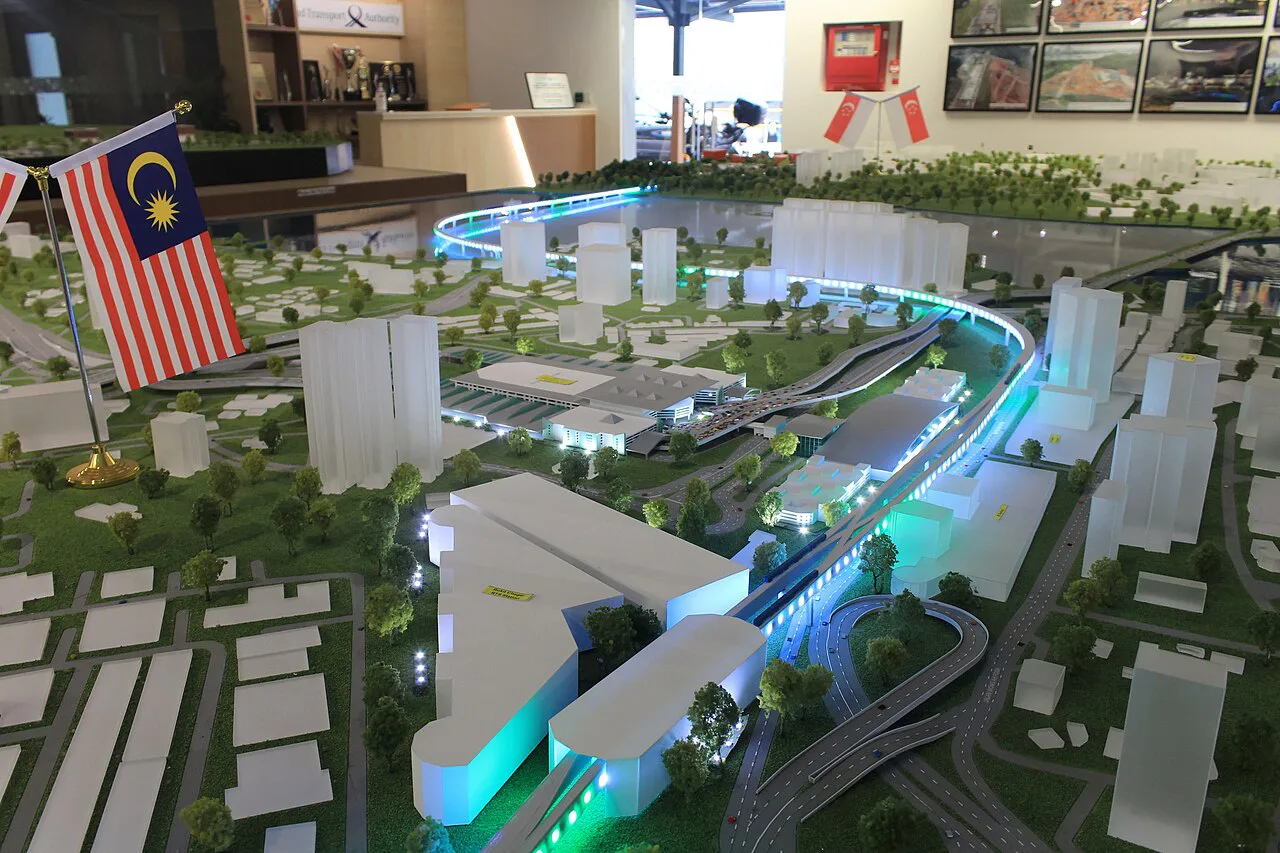
RTS Link Singapore–Johor Bahru: Guide for Travelers
What the RTS Link is, its February 2027 opening target, and how to cross from Singapore to Johor Bahru by Shuttle Tebrau, bus or Causeway until it opens.
On this page
Last updated November 2026: the RTS Link is a cross-border rail shuttle between Bukit Chagar in Johor Bahru and Woodlands North in Singapore. It has not opened. The operator, RTS Operations, announced on 2 October 2026 that passenger service is now targeted for February 2027, after the earlier end-2026 target. The operator's owners publish project news at SMRT's RTS Link page. Until it runs, the Causeway bus, train and car routes remain your options.
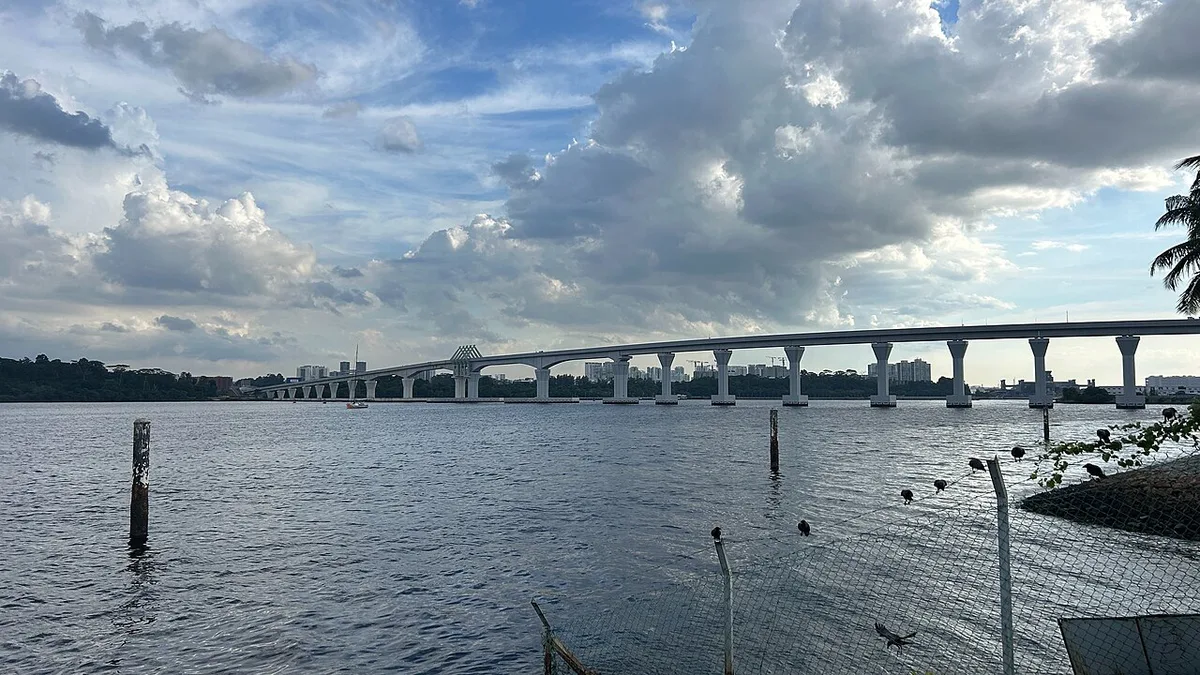
Featured image: Seloloving, CC BY-SA 4.0, via Wikimedia Commons.
What Is the RTS Link?
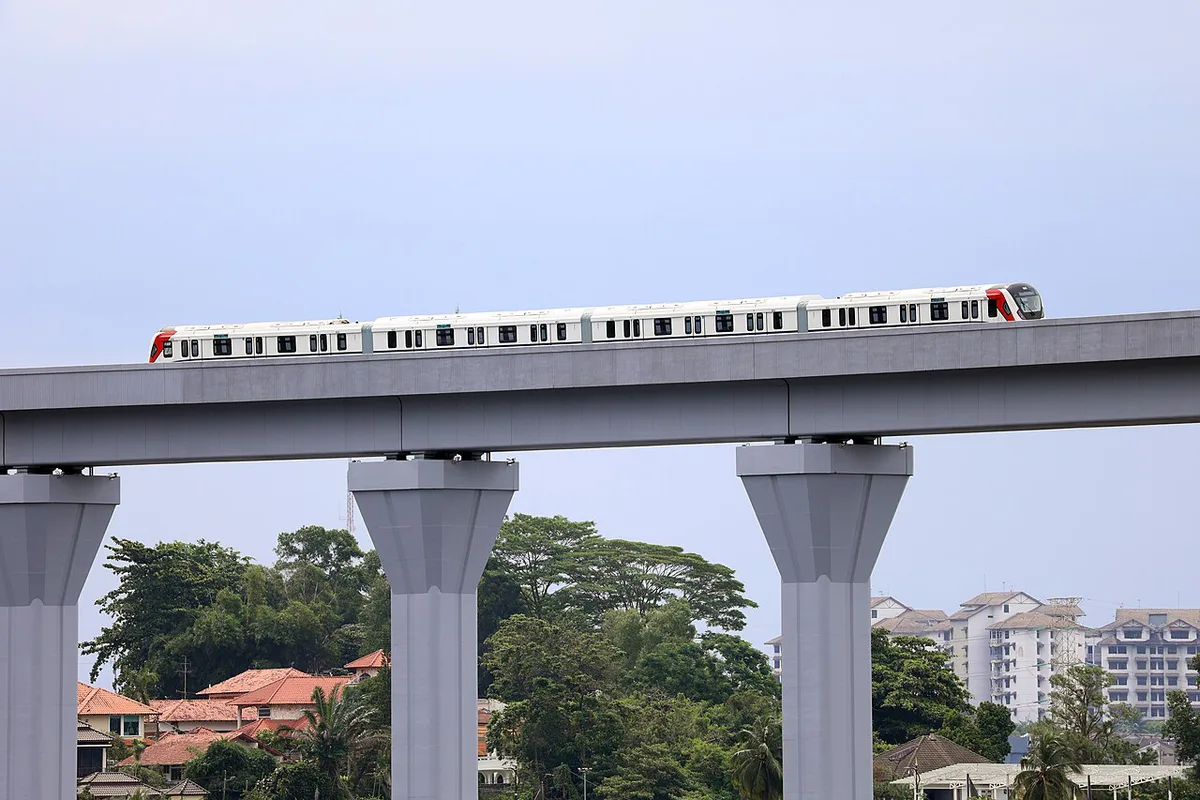
RTS stands for Rapid Transit System. This 4 km rail shuttle is designed to connect Bukit Chagar in Johor Bahru with Woodlands North, a station on the Thomson-East Coast Line. Planned capacity is up to 10,000 passengers per hour in each direction, and the ride takes about five minutes. Both stations have co-located immigration, so you clear Singapore and Malaysia checks once, at the station where you board. Status as of 18 November 2026, per AsiaOne's RTS Link timeline.
- Route: Bukit Chagar (Johor Bahru) to Woodlands North (Singapore)
- Length: about 4 km
- Planned capacity: up to 10,000 passengers per hour in each direction
- Who it suits: commuters, day-trippers and travelers heading north by rail

RTS Link Status: Opening Timeline
Early plans pointed to a 2024 start, and the target later moved to the end of 2026. On 2 October 2026 RTS Operations moved it again to February 2027. The line is in its final testing and commissioning phase, with system tests and trial runs due to finish by 31 December 2026, and independent safety certification and approvals from both governments still needed. The Cross-Border Railways (Border Control Co-location) Bill, passed in May 2026, covers the shared immigration arrangement. No exact service date has been set. Announcements come from Singapore's Land Transport Authority and the operator. Do not book anything that depends on the shuttle until a service date is published.

RTS Link vs Causeway, Bus, Train and Taxi
Today you cross on the 1 km Johor–Singapore Causeway or the Second Link, which was built in the 1990s to relieve it. More than 350,000 people cross daily, according to B1M as cited by Singapore press. A 20-minute trip can stretch to four hours in bad traffic, though that is anecdotal. The RTS Link aims to skip road queues entirely. Our guides to the Singapore to KL train and the KL bus options cover the routes that run today.
| Mode | Immigration | Road traffic exposure | Best for |
|---|---|---|---|
| RTS Link (opens Feb 2027, targeted) | Single-point, once at the boarding station | None; runs on its own rail line | Commuters and day-trippers once open |
| Causeway bus | Separate checks at each side | Yes | Budget travelers who can handle queues |
| Train | Depends on the service | No | Onward rail travelers |
| Taxi or ride-hail | Separate checks at each side | Yes | Groups with luggage |
| Driving | Separate checks at each side | Yes | Families carrying shopping |
How Immigration Works at the RTS Stations
The stations have co-located Singapore and Malaysia immigration, so a single stop replaces the two separate stops of the Causeway. Carry a valid passport and any visa your nationality needs. Entry rules and arrival requirements come from the Immigration & Checkpoints Authority and Malaysian immigration. If you know the old routine at Woodlands Checkpoint: Singapore-Johor Crossing Guide (Buses, Queues, Rules), expect a different layout and procedure at the new stations.
Getting To and From the Stations
On the Singapore side, Woodlands North connects to the Thomson-East Coast Line. On the Johor side, you board at Bukit Chagar. No bus or walking connections beyond those two stations have been published.
Bukit Chagar to Woodlands North runs about 4 km by rail, longer than the 1 km Causeway you cross by road today.
Using the RTS Link for Longer Trips
The RTS Link is a local shuttle, not a long-distance train. It does not replace the planned KL–Singapore high-speed rail, which is a separate project. Start your planning at our Singapore to Kuala Lumpur hub. Malaysian intercity rail is covered on the ETS train page, and the national operator KTM Berhad publishes current schedules. For onward routes, see Singapore to Penang: Flight vs Bus, Time and Cost and the Bangkok train route.
Costs, Tickets and Timing
No fare, ticketing method or operating hours have been published as of 18 November 2026. In February 2026 Malaysia's transport minister estimated RM15.50 to RM21.70 (about S$5 to S$7) per journey, and Singapore's Ministry of Transport said the operator will set fares commercially. Peak-hour trains are planned at about 3.6-minute intervals, per Wikipedia. Capacity of 10,000 passengers per hour in each direction is large against 350,000 daily crossings, but not everyone will switch to rail.
Mistakes to Avoid and Who Should Wait
Most problems come from planning around a target date rather than a published service date. Day-trippers and shoppers can wait for real timetables. Families with luggage should compare road options first. Drivers should keep using the Causeway or Second Link for now.
A 20-minute Causeway trip can stretch to four hours in bad traffic, (anecdotal), so tight onward bookings carry risk.
- Booking non-refundable onward tickets with tight connections
- Assuming the old Woodlands Checkpoint routine still applies
- Treating the February 2027 target as a firm opening date
- Skipping official customs and prohibited-item rules
Frequently Asked Questions
What is an RTS Link?
It is a cross-border rail shuttle linking Johor Bahru in Malaysia with Woodlands in Singapore. It covers about 4 km, takes about five minutes and has single-point immigration. It has not opened yet.
What does RTS stand for in the context of transportation?
RTS stands for Rapid Transit System. Here it names the Johor Bahru–Singapore link.
How long will RTS Johor take to complete?
Construction is largely done and testing runs to 31 December 2026. The operator announced on 2 October 2026 that passenger service is targeted for February 2027. No exact service date has been set.
Notes on Asia's railways
Optional updates when we revise our train and route guides.
You might also like

Continue reading
More guides you'll find useful