
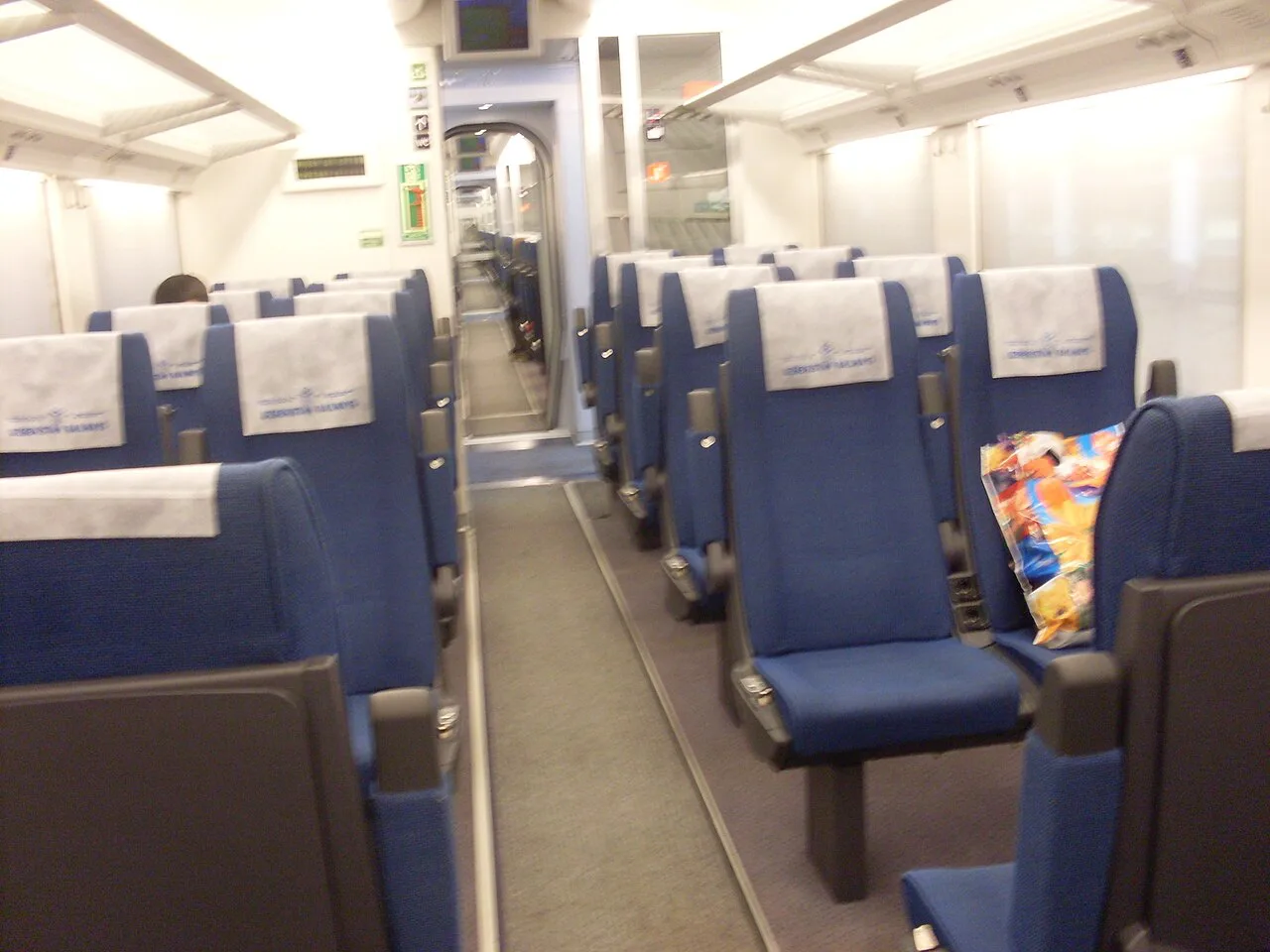
Afrosiyob Train: Routes, Classes & Booking Tips
How Uzbekistan's Afrosiyob train works: routes, classes, journey times, booking windows, and when to pick Sharq or a sleeper instead.
On this page
Last updated November 2026: the Afrosiyob train is Uzbekistan's high-speed Talgo service linking Tashkent, Samarkand, Bukhara and Karshi. Typical runs take about 2h15 to Samarkand and over four hours to Bukhara, and seats sell out, so book early. Start with Uzbekistan's wider rail network if you are still choosing routes.
Featured image: Bobyrr, CC BY-SA 4.0, via Wikimedia Commons.
What the Afrosiyob Train Is
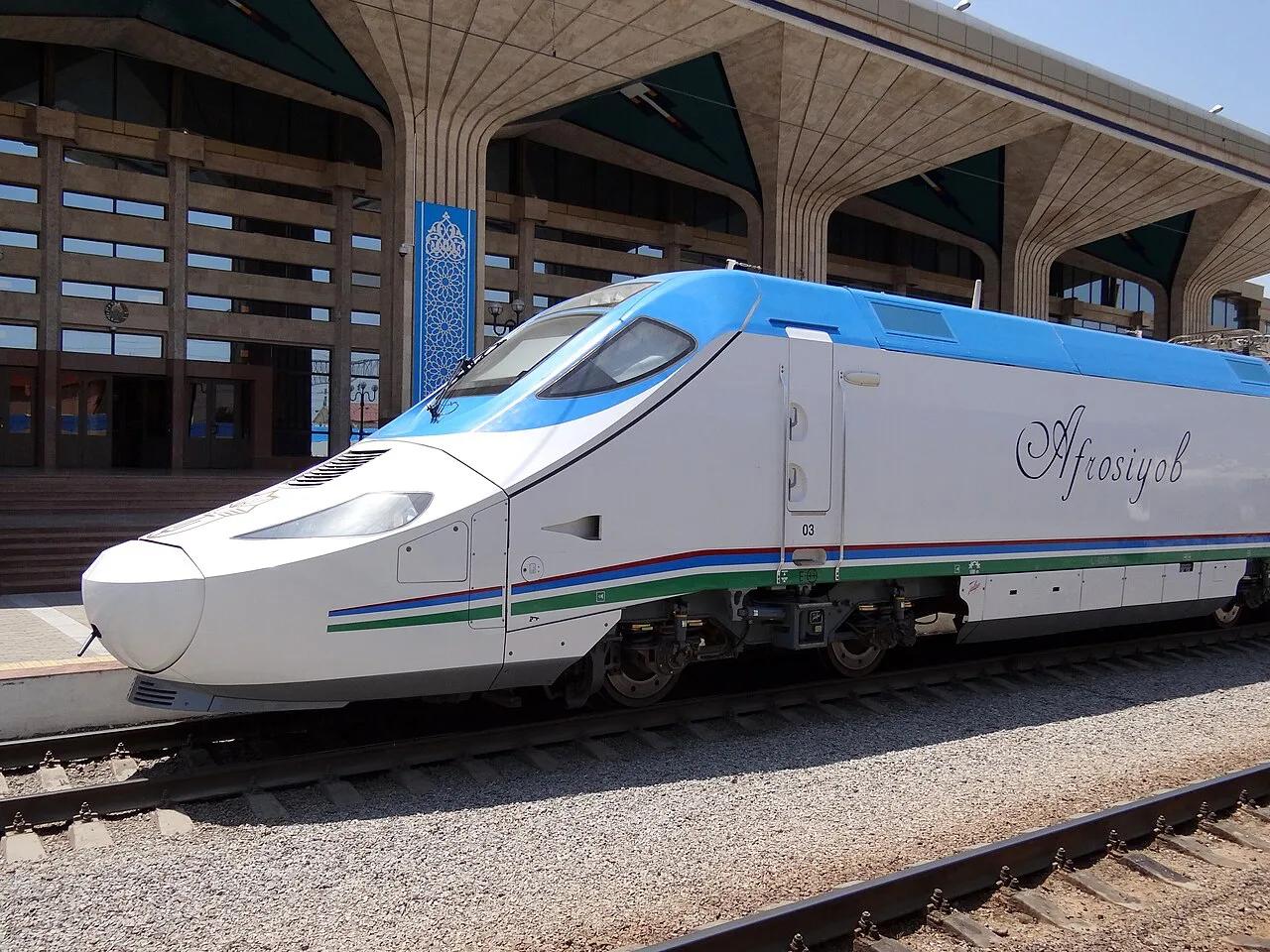
Afrosiyob is Uzbekistan's high-speed service, built around Talgo 250 trainsets and run by Uzbekistan Railways. Trains use 1,520 mm gauge track. They link Tashkent, Samarkand, Navoi and Bukhara, with a separate branch to Karshi. Commercial service began on 8 October 2011 between Tashkent and Samarkand. Daily running started on 13 February 2012, and Bukhara joined the network on 25 August 2016. The name honours Afrasiyab, the ancient settlement beside Samarkand. Two trainsets arrived in 2011, and two more Talgo 250 sets were built in 2017. Operator material gives a top speed of 250 km/h, while some travel listings quote 210 km/h, so read the figure as "up to". In March 2024, Uzbekistan Railways announced a purchase of Hyundai Rotem trains for the route. Treat them as unconfirmed until the operator says they carry passengers.
Routes and Typical Journey Times
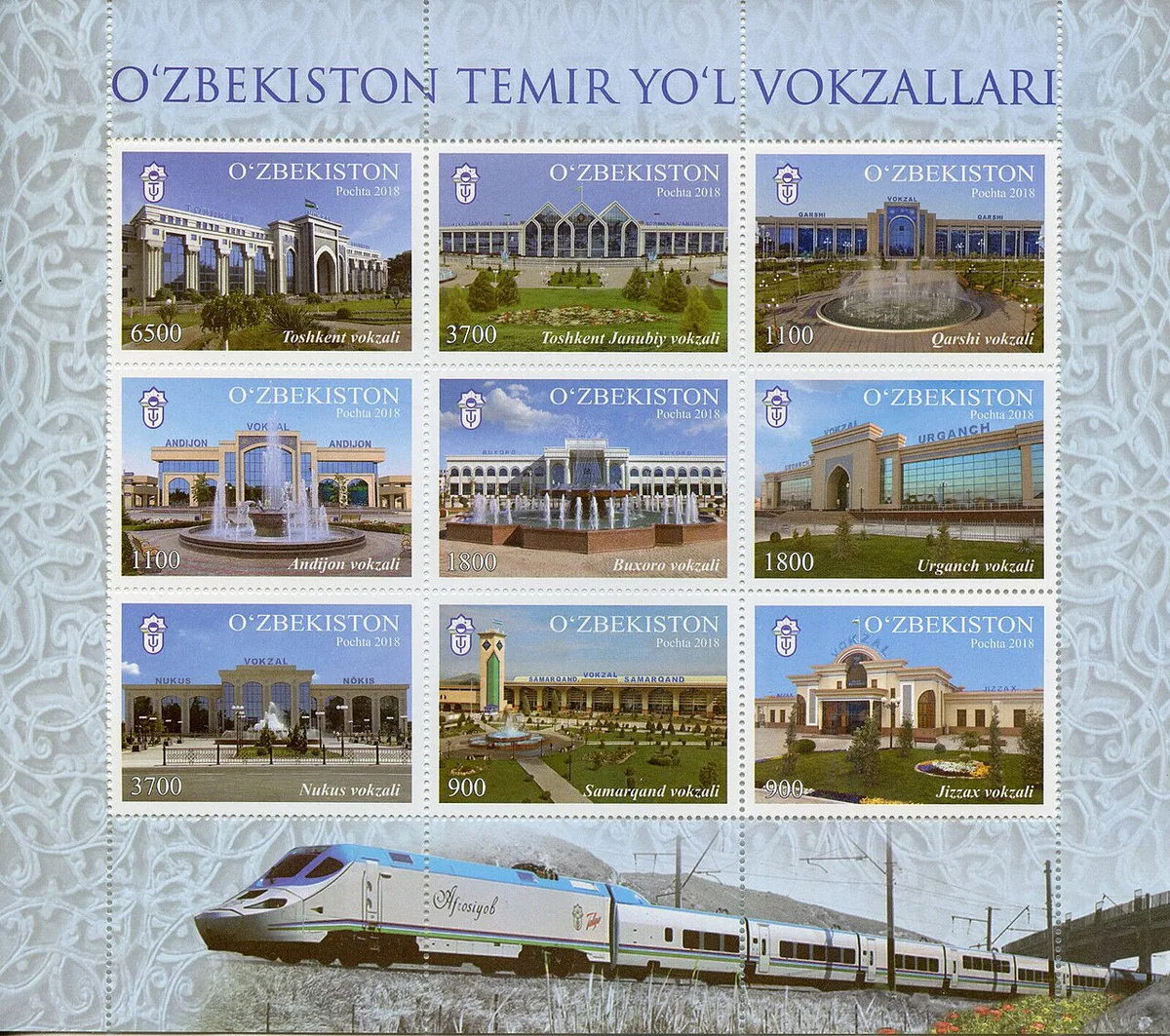
Current timetable listings put Tashkent to Samarkand at roughly 2h15 to 2h30 over 344 km. Older figures of 2h08 to Samarkand and 3h20 to Bukhara are historical. Bukhara trips now run past four hours. Times differ by train number, so check the operator on the day you travel.
Tashkent to Bukhara runs 4h10–4h20, so an evening arrival at a far-off station means a taxi transfer to budget for.
| Route | Typical time | Notes |
|---|---|---|
| Tashkent–Samarkand | 2h15–2h30 | 344 km; several departures daily |
| Tashkent–Bukhara | 4h10–4h20 | Calls at Samarkand and Navoi |
| Samarkand–Bukhara | 1h43–1h49 | Navoi sits about 59 minutes from Samarkand |
| Tashkent–Karshi | 3h39–3h41 | Runs via Samarkand |
| Samarkand–Karshi | About 1h11 | Karshi-branch trains only |
- Samarkand leg: see our Tashkent to Samarkand guide.
- Long run east to west: see the Tashkent–Bukhara route guide.
- Short hop onward: see Samarkand to Bukhara by rail.
Afrosiyob vs Sharq vs the Sleeper: Which Train to Pick
Afrosiyob is the fastest option, but it is not always the right one. Sharq is a slower daytime express. Reseller listings suggest about 3h20 to Samarkand and about 6h to Bukhara, at noticeably lower fares. Afrosiyob saves roughly one to two hours on the Bukhara run at a clearly higher price. A night train turns travel time into a hotel night, and our page on overnight sleeper options covers those services. Choose Afrosiyob when daylight hours and a fixed sightseeing schedule matter most.
| Train | Speed or time | Relative cost | Comfort | Booking difficulty | Best for |
|---|---|---|---|---|---|
| Afrosiyob | Up to 250 km/h; about 2h15–2h30 to Samarkand | Highest | Reclining seats, tables, bistro car | Hardest; sells out early | Tight itineraries, long Bukhara runs |
| Sharq | About 3h20 to Samarkand, about 6h to Bukhara (indicative) | Lower | Standard daytime seating | Easier | Budget travelers, fallback seats |
| Sleeper | Overnight | Moderate | Berths in compartments | Moderate | Saving a hotel night |
Economy, Business or VIP: Choosing a Class
Operator data lists nine cars per train. Two are VIP with 11 seats each, two are business with 26 seats each, and four are economy with 36 seats each. One car is a bistro. All seats recline and have folding tables, and video monitors are fitted. Cars have luggage racks and storage for large bags. All zones are non-smoking, and the third car has a space with fastenings for a wheelchair. Economy is enough for the 2h15 Samarkand hop. Business suits the long Bukhara run, laptop work, tall travelers and anyone who wants a quieter car. VIP has the fewest seats and the highest fare. Food, Wi-Fi and seat pitch vary by trainset, so check them on the day.
Tickets and Fares: What to Expect
Prices and hours checked November 2026: the operator sells tickets through its Uzrailway tickets mobile app and on its own site, and those listed fares are the ones to trust. Reseller listings show a modest step from economy to business and a jump to VIP of roughly double the economy fare. Bukhara fares sit well above Samarkand fares on the same train. Reseller pages also say children under 10 pay half price and children under 5 without a seat travel free. Confirm both rules with the operator before relying on them. Our guide to buying Uzbek rail tickets walks through each channel.
How to Book and What to Do If It's Sold Out
Booking is reported to open 45 days before departure and close 4 hours before. Peak season and public holidays sell out first. Reports from 2024 describe tour groups and local resellers taking seats months ahead. Plan to buy as soon as your date opens. Enter your name exactly as it appears in your passport, because a mismatch can cause trouble at boarding. Check entry rules on Uzbekistan's official tourism portal before fixing dates.
Booking opens 45 days before departure, so if Afrosiyob seats are gone, Sharq is the easier fallback.
- Try another Afrosiyob departure on the same day, even if the time is less convenient.
- Switch to Sharq, which is slower but easier to book.
- Take an overnight sleeper and save a hotel night.
- Share a taxi on the Tashkent–Samarkand road as a last resort.
Stations and Getting There
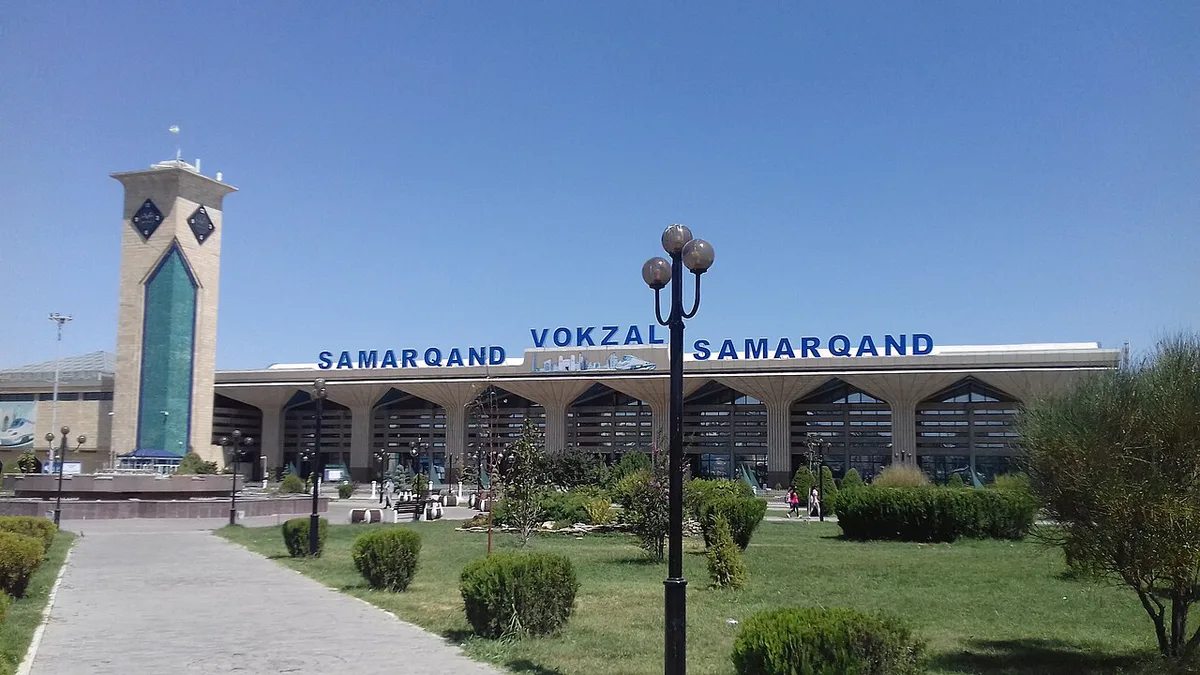
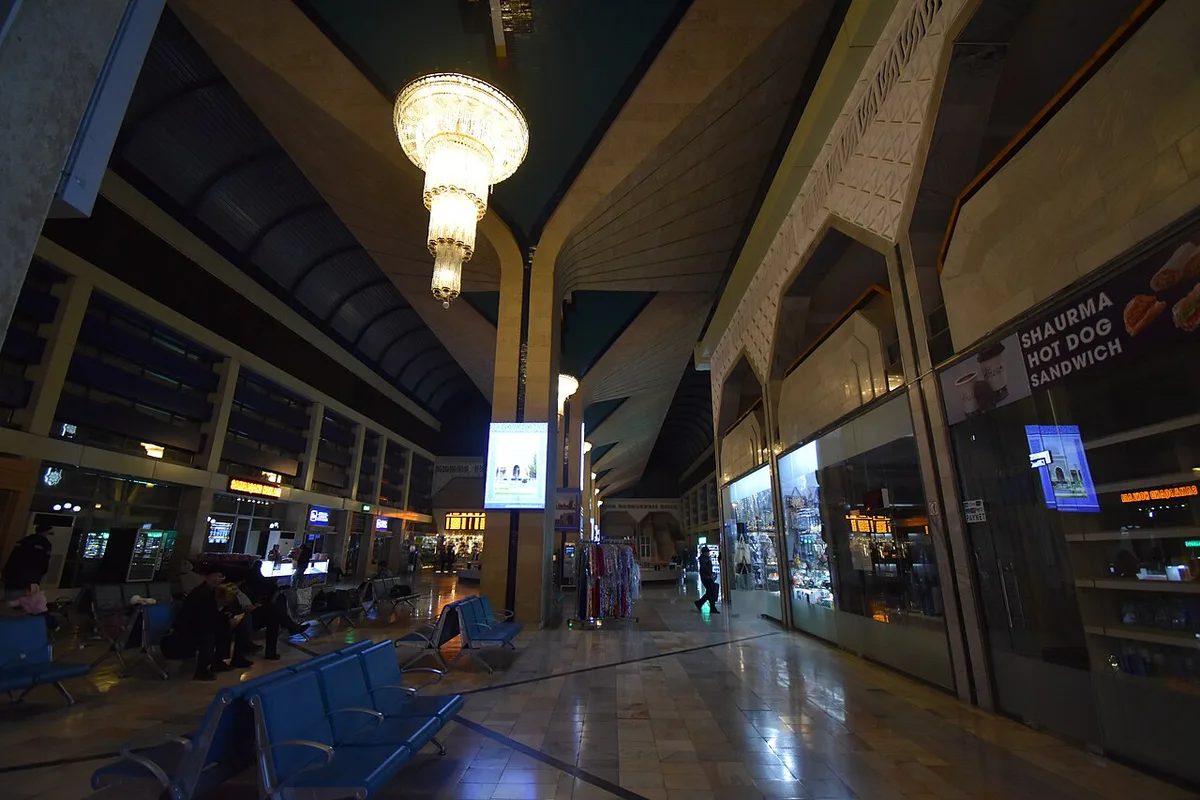
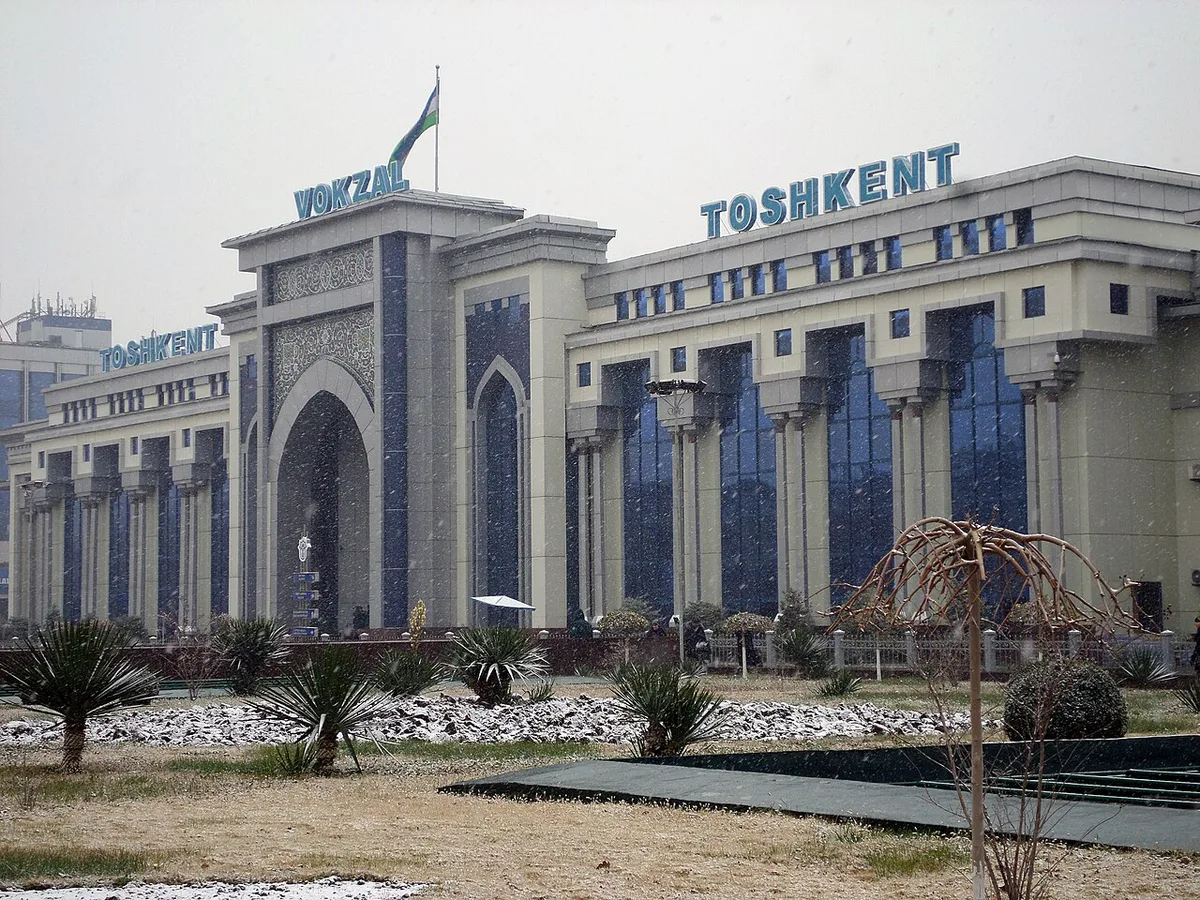
Tashkent's main station is the departure point for Afrosiyob services, and our Tashkent station details cover the approach. Arrive early enough to find your platform, since the operator controls platform assignments on the day. Samarkand and Bukhara stations lie outside the old towns, so budget for a taxi transfer. Bukhara's station sits well outside the centre, so check the distance and transfer cost before an evening arrival. Late arrivals affect hotel check-in, so ask your hotel about reception hours.
Sample Itineraries by Train
A classic Silk Road run uses three legs and suits five to seven days. Early departures give you a same-day sightseeing start. Evening departures arrive late and cut into the next morning.
- Day 1: Tashkent to Samarkand on a morning train, about 2h15–2h30.
- Days 2–3: Samarkand on foot and by taxi.
- Day 4: Samarkand to Bukhara, about 1h43–1h49.
- Day 5: Bukhara to Tashkent, about 4h10–4h20, or on to a night train.
- Extension: Samarkand to Karshi takes about 1h11, and from there you can reach Shahrisabz.
Where Afrosiyob Doesn't Go
Khiva, Nukus, Fergana and Almaty are not served by Afrosiyob. A Bukhara–Urgench–Khiva electrification project was still out to tender in May 2026, so a high-speed Khiva link is not running. For Khiva, see Bukhara to Khiva by rail. Direct service from the capital is covered in the Tashkent to Khiva trains page. Nukus is covered in our Nukus route page. The Ferghana Valley has its own page on trains to Fergana. For Kazakhstan, read about the Tashkent–Almaty rail link. A longer loop is mapped in a longer Silk Road rail route, and the Shahrisabz day trip shows how to reach a town the high-speed line skips.
Common Mistakes to Avoid
Most problems come from timing and paperwork, not the train itself.
- Waiting until the last week to buy a seat.
- Paying a reseller markup when the official app has the same train.
- Entering a passport spelling that differs from the document.
- Expecting an Afrosiyob to Khiva or Nukus.
- Planning a late evening arrival without checking hotel reception hours.
Notes on Asia's railways
Optional updates when we revise our train and route guides.
You might also like

Continue reading
More guides you'll find useful